Nutritional Intelligence
The Ozempic Side Effect Nobody Warned You About Happens on Your Head.
By J. Yoo
1 in 8 Americans is on a GLP-1 drug. Dermatologists are reporting a surge in telogen effluvium — a stress-triggered hair shedding that starts 2-4 months after rapid weight loss. The cause isn't the drug. It's what happens when your body loses weight faster than it can feed your follicles.
May 26, 2026 · 7 min read
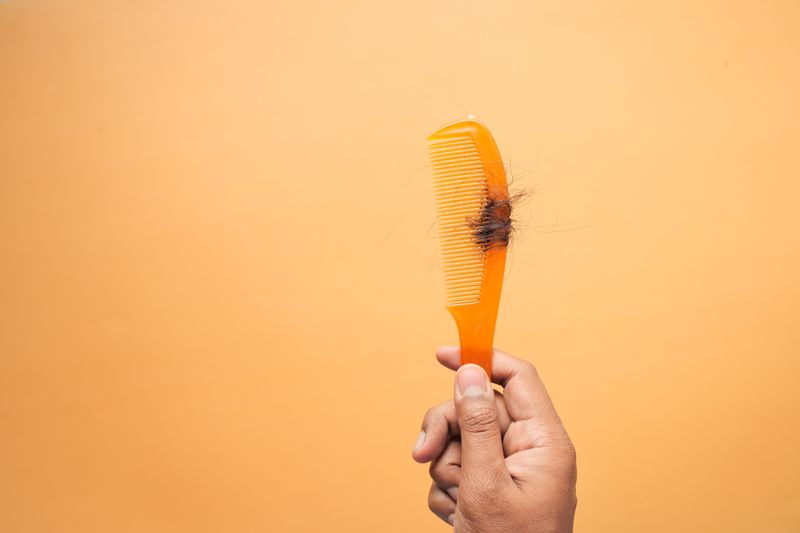
What Exactly Is Happening to People's Hair on GLP-1 Drugs?
Dermatologists are seeing a wave of patients with the same complaint: diffuse hair thinning that started 2-4 months after beginning Ozempic, Wegovy, Mounjaro, or Zepbound. The condition is called telogen effluvium — a stress response where the body pushes a large number of hair follicles from their growth phase (anagen) into their resting phase (telogen) simultaneously.
Normally, about 10% of your hair is in telogen at any time. With telogen effluvium, that number can jump to 30% or more — which means three times the normal amount of hair falling out every time you brush, shower, or run your hands through it. It's alarming, but understanding the mechanism is the first step to addressing it.
- 2-4 months
- Typical delay between starting a GLP-1 and noticing hair shedding
- 2.46x
- Elevated reporting odds ratio for hair loss with semaglutide (Ozempic/Wegovy)
- 6-12 months
- Typical recovery timeline — most cases resolve on their own
Is It the Drug — or the Weight Loss?
Current evidence points to the weight loss, not the drug itself. Telogen effluvium has been documented after any form of rapid weight loss — crash diets, bariatric surgery, severe caloric restriction — long before GLP-1 drugs existed. What's new is the scale: with 1 in 8 Americans now on these medications, the sheer volume of cases is unprecedented.
The mechanism: GLP-1 drugs suppress appetite dramatically. Patients eat less — often far less protein than their body needs. Hair is made of keratin, a protein. When the body doesn't get enough protein, it triages: vital organs get priority, hair follicles don't. The follicles go dormant, and 2-4 months later the resting hairs fall out in a wave.
What Can You Do to Protect Your Hair While on GLP-1s?
The strategy is straightforward: feed your follicles even when your appetite says no. Dermatologists and nutritionists working with GLP-1 patients recommend:
- Protein first
- Aim for at least 1.2g of protein per kg of body weight daily — even when appetite is suppressed. Prioritize protein at every meal. If you can only eat a small amount, make it protein-dense: eggs, Greek yogurt, lean meat, tofu.
- Key micronutrients
- Iron (check ferritin levels — below 50 ng/mL is concerning for hair), zinc (15-30mg), vitamin D3 (2,000-5,000 IU), and a B-complex covering B12 and folate. These are the nutrients most commonly depleted during rapid weight loss.
- Pace your weight loss
- The faster you lose, the harder the body triages. Working with your prescriber to moderate the rate of loss — especially in the first 3 months — can reduce the severity of shedding.
- Biotin — maybe
- Biotin (2,500-5,000 mcg) supports keratin infrastructure, but the evidence is strongest in people who are actually biotin-deficient — which is uncommon. It won't hurt, but don't expect it to be a magic fix if protein intake is the real bottleneck.
For informational purposes only. Not intended as medical or professional advice.
아무도 경고하지 않은 오젬픽 부작용, 머리카락에서 일어나고 있어요
미국인 8명 중 1명이 GLP-1 약물을 복용 중이에요. 피부과에서 텔로겐 탈모증 — 급격한 체중 감량 2-4개월 후 시작되는 스트레스성 탈모 — 이 급증하고 있어요. 원인은 약이 아니에요. 몸이 모낭에 영양을 공급하는 속도보다 빠르게 살이 빠질 때 일어나는 일이에요.
GLP-1 약물을 복용하면 머리카락에 정확히 무슨 일이 일어나나요?
피부과에 같은 증상을 호소하는 환자들이 밀려오고 있어요: 오젬픽, 위고비, 마운자로, 제프바운드를 시작한 지 2-4개월 후 나타나는 전반적인 모발 가늘어짐. 이 상태를 텔로겐 탈모증이라고 해요 — 몸이 많은 수의 모낭을 성장기(아나겐)에서 휴지기(텔로겐)로 동시에 밀어넣는 스트레스 반응이에요.
보통 전체 머리카락의 약 10%가 항상 텔로겐 상태예요. 텔로겐 탈모증에서는 이 숫자가 30% 이상으로 올라갈 수 있어요 — 빗질하거나 샤워하거나 손으로 쓸어넘길 때마다 정상의 세 배 이상의 머리카락이 빠진다는 뜻이에요. 놀라운 일이지만, 메커니즘을 이해하는 것이 해결의 첫걸음이에요.
- 2-4개월
- GLP-1 시작 후 탈모를 느끼기까지의 일반적인 지연 시간
- 2.46배
- 세마글루타이드(오젬픽/위고비) 사용 시 탈모 보고 비율
- 6-12개월
- 일반적인 회복 기간 — 대부분의 경우 저절로 해결돼요
약 때문인가요, 체중 감량 때문인가요?
현재 증거는 약 자체가 아니라 체중 감량을 가리키고 있어요. 텔로겐 탈모증은 GLP-1 약물이 존재하기 훨씬 전부터 모든 형태의 급격한 체중 감량 — 극단적 다이어트, 비만 수술, 심각한 칼로리 제한 — 후에 기록되어 왔어요. 새로운 건 규모예요: 미국인 8명 중 1명이 이 약을 복용하면서 사례의 절대 수가 전례 없이 많아졌어요.
메커니즘: GLP-1 약물이 식욕을 극적으로 억제해요. 환자들이 덜 먹게 되는데 — 종종 몸이 필요로 하는 것보다 훨씬 적은 단백질을 섭취해요. 머리카락은 단백질인 케라틴으로 만들어져요. 몸이 충분한 단백질을 얻지 못하면 우선순위를 정해요: 중요한 장기가 먼저, 모낭은 아니에요. 모낭이 휴면에 들어가고, 2-4개월 후 쉬고 있던 머리카락이 한꺼번에 빠져요.
GLP-1을 복용하면서 머리카락을 보호하려면 어떻게 해야 하나요?
전략은 간단해요: 식욕이 없다고 해도 모낭에 영양을 공급하세요. GLP-1 환자를 담당하는 피부과 전문의와 영양사가 권장하는 방법이에요:
- 단백질 우선
- 매일 체중 kg당 최소 1.2g의 단백질을 목표로 하세요 — 식욕이 억제되어 있어도요. 매 식사에서 단백질을 우선하세요. 소량만 먹을 수 있다면 단백질 밀도가 높은 음식으로: 달걀, 그릭 요거트, 저지방 고기, 두부.
- 핵심 미량영양소
- 철분(페리틴 수치 확인 — 50 ng/mL 미만이면 모발에 우려), 아연(15-30mg), 비타민 D3(2,000-5,000 IU), B12와 엽산을 포함한 B-복합체. 급격한 체중 감량 중 가장 흔하게 고갈되는 영양소들이에요.
- 체중 감량 속도 조절
- 빠르게 빠질수록 몸의 우선순위 선별이 가혹해져요. 처방의와 함께 감량 속도를 조절하는 것 — 특히 처음 3개월 동안 — 이 탈모의 심각도를 줄일 수 있어요.
- 비오틴 — 어쩌면
- 비오틴(2,500-5,000 mcg)이 케라틴 구조를 지지하지만, 실제로 비오틴 결핍인 사람에게서 가장 강한 근거가 있어요 — 흔한 건 아니에요. 해가 되진 않지만, 단백질 섭취가 진짜 병목이라면 마법 같은 효과를 기대하지 마세요.
본 콘텐츠는 정보를 제공하기 위한 것이며, 전문적인 의료 조언을 대신하지 않습니다.