Molecular Insights
Hanbang 2.0: Korea Is Upgrading 5,000-Year-Old Herbal Medicine With Peptides and Nanotech
Ginseng, mugwort, and licorice root have been Korean skincare staples for millennia. Now Korean labs are pairing them with encapsulation tech and peptide science — and the results are outperforming either approach alone.
June 1, 2026 · 8 min read
What Is Hanbang and Why Is It Having a Second Moment?
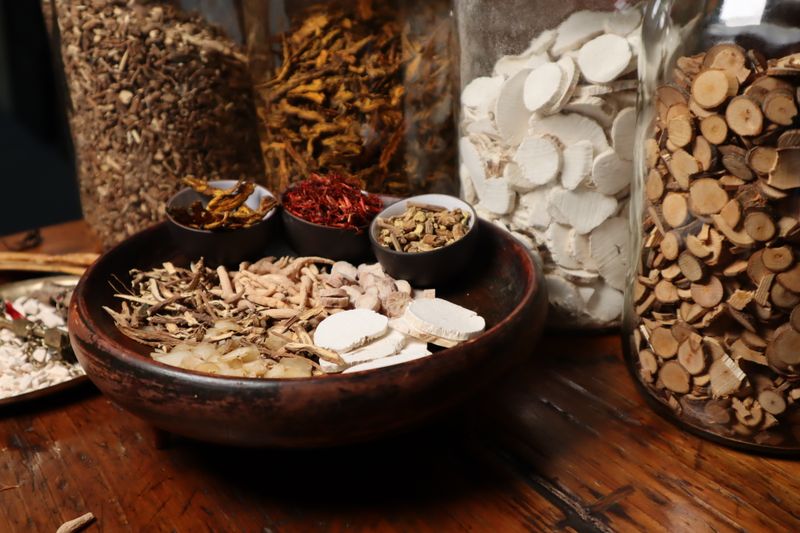
Hanbang (한방) is Korea's traditional herbal medicine system — rooted in the same philosophical tradition as Traditional Chinese Medicine but with distinctly Korean ingredients, formulations, and diagnostic approaches. For skincare, the key botanicals are ginseng, mugwort (ssuk), centella asiatica, licorice root, and bamboo sap.
The first wave of hanbang skincare — led by Sulwhasoo in the 1960s — relied on traditional extraction methods. Effective, but inconsistent. Batch-to-batch variation was high, active compound concentrations were unpredictable, and many beneficial molecules degraded before they reached the skin. The second wave fixes all of that.
- 5,000+
- years of documented herbal medicine use on the Korean peninsula
- 43%
- greater improvement in skin elasticity with encapsulated ginseng extract vs. non-encapsulated (2025 comparative study)
- 100nm
- diameter of Sulwhasoo's lipid nanoparticles — small enough to pass through the stratum corneum
What Makes Hanbang 2.0 Different from Traditional Herbal Skincare?
Three technologies define the upgrade:
Which Traditional Ingredients Are Getting the Biggest Upgrades?
- Ginseng (인삼)
- The crown jewel. Ginsenosides are potent antioxidants associated with firmer-looking skin. The upgrade: Compound K conversion + nanoencapsulation. Sulwhasoo has spent five decades on ginseng science alone.
- Mugwort — Ssuk (쑥)
- Korea's universal soothing herb. Rich in chamazulene and flavonoids. The upgrade: peptide pairing for dual soothing-firming action. I'M FROM's Mugwort Essence started the trend; Roundlab's peptide ampoule represents 2.0.
- Licorice Root (감초)
- Contains glabridin, associated with a brighter-looking complexion. Traditionally used as a harmonizing herb. The upgrade: stabilized delivery systems that prevent the active from oxidizing before reaching the skin.
- Centella Asiatica (병풀)
- Already a K-beauty hero thanks to cica products. Key actives: asiaticoside and madecassoside. The upgrade: ethosomes (flexible nano-vesicles) that carry centella compounds past the skin barrier more efficiently than traditional creams.
Is Hanbang 2.0 Just Marketing, or Does the Science Hold Up?
The individual ingredients have genuine research behind them. Ginsenosides have been studied for antioxidant properties in peer-reviewed journals for decades. Centella's asiaticoside is one of the most well-documented soothing compounds in dermatology. Mugwort's chamazulene has established calming properties.
The new variable is the delivery technology. Encapsulation genuinely changes how much active ingredient reaches the target layer of skin — this isn't just packaging spin. The 43% elasticity improvement gap between encapsulated and non-encapsulated ginseng extract is the kind of data that makes formulation chemists pay attention. The question isn't whether the tech works in lab conditions; it's whether each brand's specific implementation delivers on the promise.
For informational purposes only. Not intended as medical or professional advice.
Which Hanbang 2.0 Products Are Worth Trying?
- Sulwhasoo Concentrated Ginseng Renewing Cream — The gold standard. Five decades of ginseng research, Compound K conversion, and nanoencapsulated ginsenosides. Premium price, but the formulation depth is unmatched.
- Beauty of Joseon Revive Serum: Ginseng + Snail Mucin — Fermented ginseng extract paired with snail mucin for hydration. The accessible entry point to hanbang 2.0 — effective formula at a fraction of the luxury price.
- Roundlab Mugwort Calming Peptide Ampoule — The defining hanbang 2.0 formula: traditional mugwort soothing + modern peptide firming in one product. Represents the best of what this movement offers.
- I'M FROM Mugwort Essence — The classic that started the modern mugwort wave. Pure 100% mugwort extract from Ganghwa Island — no peptides here, but the benchmark that 2.0 products are building on.
한방 2.0 — 5천 년 된 약초에 펩타이드와 나노 기술을 입히는 한국
인삼, 쑥, 감초는 수천 년간 한국 스킨케어의 핵심이었어요. 지금 한국 연구실에서 캡슐화 기술과 펩타이드 과학을 결합하고 있는데, 어느 한쪽만 쓸 때보다 훨씬 좋은 결과가 나오고 있어요.
한방이 뭐고, 왜 지금 다시 주목받을까?
한방(韓方)은 한국 전통 약초 의학 체계예요. 한의학과 같은 철학적 뿌리를 공유하지만 한국 고유의 약재, 처방, 진단 방식을 갖고 있어요. 스킨케어에서 핵심 약초는 인삼, 쑥, 병풀(시카), 감초, 죽수(대나무 수액)이에요.
1960년대 설화수가 이끈 한방 스킨케어 1세대는 전통 추출법에 의존했어요. 효과는 있었지만 일관성이 떨어졌어요. 배치마다 편차가 크고, 활성 성분 농도를 예측하기 어려웠고, 유익한 분자들이 피부에 닿기 전에 분해되는 경우가 많았어요. 2세대는 이 문제를 전부 해결하고 있어요.
- 5,000+
- 한반도에서 기록된 약초 의학 사용 역사
- 43%
- 캡슐화 인삼 추출물의 탄력 개선 효과가 비캡슐화 대비 43% 높았어요 (2025 비교 연구)
- 100nm
- 설화수 지질 나노입자의 지름 — 각질층을 통과할 수 있을 만큼 작아요
한방 2.0은 기존 한방 화장품과 뭐가 다를까?
세 가지 기술이 이번 업그레이드를 정의해요:
어떤 전통 성분이 가장 큰 업그레이드를 받고 있을까?
- 인삼
- 한방의 대표 주자예요. 진세노사이드는 탄력감 있는 피부와 관련된 강력한 항산화 성분이에요. 업그레이드: 컴파운드 K 전환 + 나노캡슐화. 설화수는 인삼 연구에만 50년을 투자했어요.
- 쑥
- 한국의 대표 진정 약초예요. 카마줄렌과 플라보노이드가 풍부해요. 업그레이드: 펩타이드 결합으로 진정+탄력 이중 효과. 아임프롬 쑥 에센스가 시작이었고, 라운드랩 펩타이드 앰플이 2.0이에요.
- 감초
- 글라브리딘을 함유하고 있어 밝은 피부 톤과 관련이 있어요. 전통적으로 조화를 위한 약초로 사용됐어요. 업그레이드: 활성 성분이 산화되기 전에 피부에 도달하도록 안정화 전달 시스템 적용.
- 병풀 (시카)
- 시카 제품 덕분에 이미 K-뷰티의 영웅이에요. 핵심 성분: 아시아티코사이드, 마데카소사이드. 업그레이드: 에토좀(유연한 나노 소포)이 센텔라 성분을 기존 크림보다 효율적으로 피부 장벽 너머로 전달해요.
한방 2.0, 마케팅일 뿐일까? 과학적으로 근거가 있을까?
개별 성분들은 진짜 연구 근거가 있어요. 진세노사이드의 항산화 특성은 수십 년간 학술 저널에서 연구됐어요. 센텔라의 아시아티코사이드는 피부과학에서 가장 잘 문서화된 진정 성분 중 하나예요. 쑥의 카마줄렌도 진정 효과가 확립돼 있어요.
새로운 변수는 전달 기술이에요. 캡슐화는 활성 성분이 피부 목표 층에 얼마나 도달하는지를 실제로 바꿔요 — 단순한 패키징 마케팅이 아니에요. 캡슐화·비캡슐화 인삼 추출물 간 탄력 개선 43% 차이는 제형 화학자들이 주목할 수준의 데이터예요. 문제는 기술이 실험실에서 작동하느냐가 아니라, 각 브랜드의 구체적 구현이 약속을 지키느냐예요.
본 콘텐츠는 정보를 제공하기 위한 것이며, 전문적인 의료 조언을 대신하지 않습니다.
어떤 한방 2.0 제품이 써볼 만할까?
- Sulwhasoo Concentrated Ginseng Renewing Cream — 한방 크림의 정점이에요. 50년 인삼 연구, 컴파운드 K 전환, 나노캡슐화 진세노사이드. 가격대가 높지만 제형의 깊이는 비교 불가예요.
- Beauty of Joseon Revive Serum: Ginseng + Snail Mucin — 발효 인삼 추출물에 달팽이 뮤신을 더해 보습까지 잡았어요. 럭셔리 가격의 일부로 한방 2.0에 입문하기 좋아요.
- Roundlab Mugwort Calming Peptide Ampoule — 한방 2.0을 정의하는 포뮬러예요. 쑥의 진정 효과와 펩타이드의 탄력 케어를 하나에 담았어요. 이 움직임이 제공하는 최고를 보여줘요.
- I'M FROM Mugwort Essence — 현대 쑥 물결을 시작한 클래식이에요. 강화도산 쑥 100% 추출물 — 펩타이드는 없지만 2.0 제품들이 기반으로 삼는 기준점이에요.