Follicle Science
"Glass Hair" Is 2026's Answer to Glass Skin. Here's How Korean Brands Are Engineering Shine at the Molecular Level.
Glass hair isn't just healthy hair with good lighting. Korean brands are engineering mirror-finish shine using ceramides, peptides, and plant oils that physically restructure the cuticle — and the science is more interesting than the trend.
May 28, 2026 · 7 min read
What Is Glass Hair — and Why Does Korean Hair Look Like That?
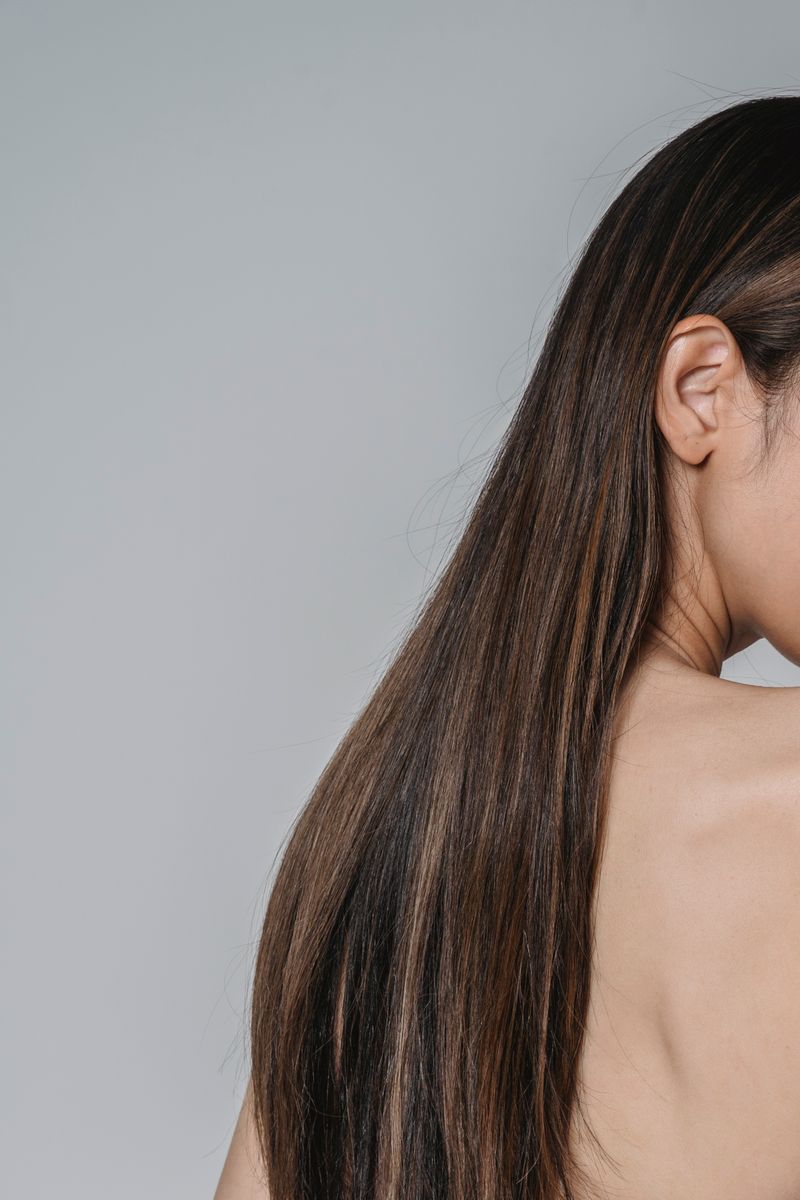
Glass hair is exactly what it sounds like: hair so smooth and reflective it looks like a sheet of glass. The term emerged from Korean salons in late 2025 and exploded on social media in 2026, following the same trajectory as glass skin before it. But unlike glass skin (which is mostly about hydration and light-diffusing finish), glass hair is fundamentally about cuticle architecture.
Each strand of hair is covered in overlapping cuticle scales — like shingles on a roof. When those scales lie flat and tight, light bounces off the surface uniformly, creating shine. When they're lifted, cracked, or missing (from heat damage, chemical processing, or UV exposure), light scatters in every direction — and hair looks dull, frizzy, and rough.
- 5-10 layers
- The number of cuticle scale layers on a healthy hair strand — damage reduces this, making shine impossible to fake with products alone
- pH 3.5-4.5
- The slightly acidic pH range that causes cuticle scales to contract and lie flat — Korean treatments are formulated in this range
- Camellia oil
- Korea's signature hair finishing oil — used for centuries in Korean and Japanese hair care for its lightweight, high-shine profile
How Do Ceramides and Peptides Repair Hair at the Molecular Level?
Korean hair care borrows directly from skincare science — and that's not a marketing gimmick. The same ceramides that support your skin's lipid barrier also exist naturally in the hair cuticle's cell membrane complex (CMC). When ceramides are depleted, cuticle scales lose their "glue" and start lifting. Korean treatments like Lador's Perfect Hair Fill-Up use low-molecular-weight ceramides and keratin proteins to physically fill in these gaps.
What's the Korean Glass Hair Routine — Step by Step?
Korean glass hair isn't one product — it's a layered system, just like K-beauty skincare. The philosophy: start at the scalp, treat the strand, seal the cuticle.
- Step 1: Scalp care
- A clean, balanced scalp produces healthier hair from the root. Use a scalp scaler or scrub 1-2x per week to remove buildup, followed by a scalp essence or tonic with centella or peptides.
- Step 2: Protein treatment
- Weekly protein-fill treatments (like Moremo Water Treatment) deliver amino acids and keratin directly into the cortex, reconstructing strength from the inside. Apply to wet hair, wait 10 seconds to 5 minutes, rinse.
- Step 3: Leave-in serum or essence
- A lightweight hair serum with ceramides and hyaluronic acid adds a hydration layer without weight. Apply to damp, towel-dried hair before heat styling.
- Step 4: Finishing oil
- Camellia oil is the Korean finishing standard — 1-2 drops on dry ends seals the cuticle and creates that mirror-like light reflection. Argan and jojoba work too, but camellia has the lightest finish.
Which Korean Products Are Best for Glass Hair?
- Moremo Water Treatment Miracle 10 — 10-second protein treatment with 17 types of amino acids. The viral K-beauty hair product — fills cuticle gaps instantly for visible smoothness.
- Lador Perfect Hair Fill-Up — Single-use ampoules with keratin, silk protein, and collagen. Professional-grade cuticle reconstruction in a 0 packet.
- Mise en Scène Perfect Serum Original — Korea's bestselling hair serum — 7 plant oils including argan and camellia for a lightweight, high-shine finish without greasiness.
For informational purposes only. Not intended as medical or professional advice.
글래스 헤어, 2026년 글래스 스킨의 다음 챕터. K-뷰티가 분자 단위로 윤기를 설계하는 법
글래스 헤어는 단순히 머릿결이 좋아 보이는 게 아니에요. 세라마이드, 펩타이드, 식물 오일로 큐티클 구조 자체를 재정비해서 거울 같은 광택을 만드는 건데 — 트렌드보다 그 뒤의 과학이 훨씬 흥미로워요.
Close-up of smooth, shiny dark hair draped over a shoulder · Pexels 글래스 헤어가 대체 뭐고, 한국인 머리카락은 왜 유난히 윤기가 날까요?
말 그대로 유리처럼 매끈하고 빛을 또렷하게 반사하는 머리카락이에요. 2025년 말 한국 미용실에서 쓰이기 시작한 용어인데, 2026년 들어 소셜 미디어에서 폭발적으로 퍼졌어요. 글래스 스킨이 걸었던 길과 똑같은 궤적이에요. 다만 글래스 스킨이 수분감과 빛 산란에 관한 거였다면, 글래스 헤어는 큐티클 구조 자체가 핵심이에요.
모발 한 올 한 올은 지붕 기와처럼 겹겹이 겹친 큐티클 비늘로 덮여 있어요. 비늘이 납작하게 밀착되어 있으면 빛이 표면에서 한 방향으로 반사돼서 윤기가 나요. 반대로 열, 염색, 자외선 때문에 비늘이 들뜨거나 깨지거나 빠지면 빛이 사방으로 흩어져서 — 머리카락이 칙칙하고 부스스하고 거칠어 보여요.
- 5~10겹
- 건강한 모발 한 올에 쌓인 큐티클 비늘 층수예요. 손상으로 층이 줄어들면 제품만으로는 진짜 윤기를 만들 수 없어요
- pH 3.5~4.5
- 큐티클 비늘을 오므라들게 해서 납작하게 눕히는 약산성 pH 범위예요. K-뷰티 트리트먼트가 이 범위에 맞춰 설계돼요
- 동백유(camellia oil)
- 한국의 대표 헤어 피니싱 오일이에요. 가볍고 윤기가 뛰어나서 수세기 동안 한국·일본 헤어케어에서 써 왔어요
세라마이드와 펩타이드가 모발에서 어떤 역할을 할까요?
K-뷰티 헤어케어가 스킨케어 과학을 직접 차용한다는 얘기, 마케팅이 아니라 사실이에요. 피부 지질 장벽을 지탱하는 세라마이드가 모발 큐티클의 세포막 복합체(CMC, cell membrane complex)에도 원래 들어 있거든요. 세라마이드가 빠지면 큐티클 비늘끼리 붙어있던 '풀'이 사라지면서 비늘이 들뜨기 시작해요. 라도르 퍼펙트 헤어 필업 같은 K-뷰티 트리트먼트는 저분자 세라마이드와 케라틴 단백질로 이 빈틈을 물리적으로 채우는 방식이에요.
K-뷰티 글래스 헤어 루틴, 단계별 정리
K-뷰티 글래스 헤어는 제품 하나로 완성되는 게 아니에요. K-뷰티 스킨케어처럼 레이어링 시스템이에요. 원칙은 명확해요 — 두피에서 시작하고, 모발을 보강하고, 큐티클을 밀봉하는 순서예요.
- 1단계: 두피 케어
- 깨끗하고 균형 잡힌 두피가 뿌리부터 건강한 모발을 길러줘요. 주 1~2회 스캘프 스케일러나 스크럽으로 묵은 각질과 노폐물을 정리하고, 센텔라나 펩타이드 성분의 두피 에센스로 마무리하세요.
- 2단계: 단백질 트리트먼트
- 주 1회 단백질 충전 트리트먼트(모레모 워터 트리트먼트 같은 제품)를 쓰면 아미노산과 케라틴이 모발 피질 안쪽에 직접 전달돼요. 젖은 모발에 바르고 10초~5분 뒤에 헹구면 돼요.
- 3단계: 리브인 세럼·에센스
- 세라마이드와 히알루론산이 들어간 가벼운 헤어 세럼이 무겁지 않게 보습층을 더해줘요. 타올로 물기를 살짝 뺀 젖은 모발에 열 스타일링 전에 발라주세요.
- 4단계: 피니싱 오일
- 동백유가 한국 헤어 피니싱의 기본이에요. 마른 모발 끝에 1~2방울이면 큐티클을 밀봉하고 거울 같은 빛 반사를 만들어 줘요. 아르간, 호호바도 좋지만 동백유가 마무리감이 가장 가벼워요.
글래스 헤어를 위한 K-뷰티 추천 제품
- Moremo Water Treatment Miracle 10 — 17종 아미노산이 담긴 10초 단백질 트리트먼트예요. K-뷰티 헤어 분야에서 바이럴 된 제품으로, 큐티클 빈틈을 바로 채워서 매끈함이 눈에 띄어요.
- Lador Perfect Hair Fill-Up — 케라틴, 실크 프로틴, 콜라겐이 들어간 1회용 앰플이에요. 약 1만 5천 원으로 전문가급 큐티클 보수를 경험할 수 있어요.
- Mise en Scène Perfect Serum Original — 한국 헤어 세럼 베스트셀러 — 아르간, 동백 포함 7종 식물 오일로 기름지지 않으면서도 가볍고 윤기 나는 마무리를 만들어요.
본 콘텐츠는 정보를 제공하기 위한 것이며, 전문적인 의료 조언을 대신하지 않습니다.