Decode
Your Skincare Isn't "Absorbing." Here's What's Actually Happening at the Molecular Level
When your serum "sinks in," it hasn't been absorbed into your bloodstream. Most skincare works on or just inside the outermost dead-cell layer of your skin — and that's exactly where it should be.
June 4, 2026 · 7 min read
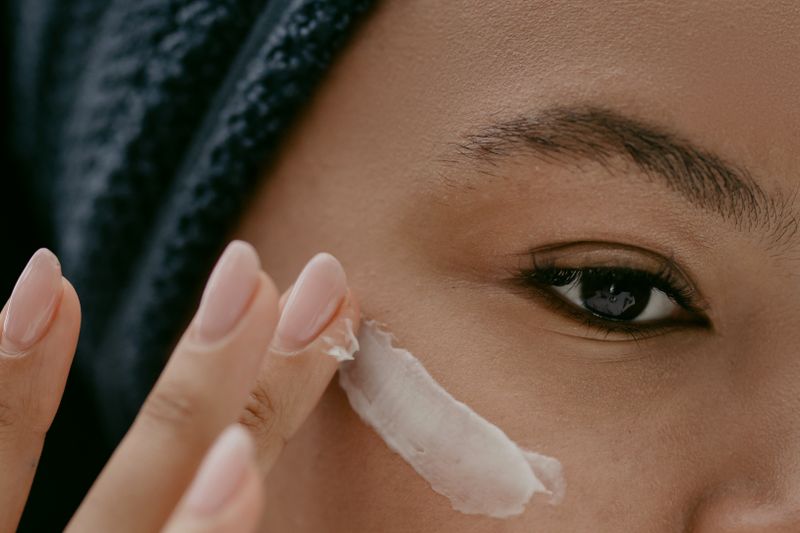
Does skincare actually absorb into your skin?
When you apply a serum and it "disappears," it feels like your skin drank it up. But what actually happened? The product spread into the crevices of your stratum corneum — the outermost layer of skin, made up of 15–20 layers of dead, flattened cells bound together by lipids (ceramides, cholesterol, fatty acids). Think of it as a brick wall where the bricks are dead cells and the mortar is fat.
This barrier exists to keep things out. It's your body's first line of defense against pathogens, pollution, and water loss. The fact that most skincare can't get past it isn't a flaw — it's the system working exactly as designed.
- 500 Da
- The molecular weight cutoff — molecules above this generally can't penetrate the stratum corneum
- 15–20 layers
- Dead cell layers in the stratum corneum that act as the skin's barrier
- Up to 40%
- Reduction in active absorption from improper layering order
If products don't absorb, how do moisturizers actually work?
Moisturizers don't work by pumping water into your skin. They work through three distinct mechanisms — and understanding them changes how you build your routine.
Which skincare ingredients actually penetrate — and which don't?
The 500 Dalton rule is the rough guideline: molecules under 500 Daltons (a unit of molecular weight) can potentially cross the stratum corneum via passive diffusion through the lipid mortar. Above that, they generally can't.
- ✅ Can penetrate (<500 Da)
- Retinol (286 Da) · Niacinamide (122 Da) · Glycolic acid (76 Da) · Salicylic acid (138 Da) · Vitamin C / L-ascorbic acid (176 Da) · Caffeine (194 Da) · GHK-Cu copper peptide (403 Da)
- ❌ Stays on the surface (>500 Da)
- Hyaluronic acid (up to 1,000,000 Da) · Collagen (300,000 Da) · Most peptides (800–2,000 Da) · Ceramides in most formulas · Snail mucin glycoproteins
Important nuance: "stays on the surface" doesn't mean "doesn't work." Hyaluronic acid is an incredible humectant precisely because it sits in the stratum corneum and attracts water there. Collagen is a great film-former that prevents water loss. The surface is where most of the action happens, and that's fine.
So what does it mean when a serum "sinks in" fast?
Quick absorption usually means one of three things: the formula is mostly water (and evaporated), it's a lightweight emollient that spread easily into the crevices of your stratum corneum, or you used very little product. Fast absorption is a texture achievement, not a penetration achievement.
Conversely, a product that feels "sticky" or "sits on top" isn't necessarily failing. It might be a high-concentration humectant (like a thick hyaluronic acid serum) that's designed to hold water in the stratum corneum for hours. If it eventually stops feeling sticky — that's it absorbing ambient moisture and doing its job.
Products that work exactly where they should
- COSRX Advanced Snail 96 Mucin Power Essence — High-molecular-weight mucin sits in the stratum corneum as a humectant film — it's working precisely because it doesn't "absorb."
- Illiyoon Ceramide Ato Concentrate Cream — Ceramide-rich emollient that fills gaps in the lipid mortar — repairs the barrier without needing to penetrate it.
- Beauty of Joseon Glow Serum: Propolis + Niacinamide — Niacinamide (122 Da) is one of the few ingredients small enough to genuinely penetrate — combined with propolis for surface-level soothing.
For informational purposes only. Not intended as medical or professional advice.
스킨케어가 '흡수'되는 게 아니에요. 분자 수준에서 실제로 일어나는 일
세럼이 '쏙 들어간다'고 느껴도 혈류로 흡수된 건 아니에요. 대부분의 스킨케어는 피부 최외각 죽은 세포층 위 또는 바로 안쪽에서 작동하는데 — 원래 그래야 해요.
스킨케어가 정말 피부에 흡수될까?
세럼을 바르고 '사라진' 느낌이 들면, 피부가 마셔버린 것 같죠. 하지만 실제로 일어난 일은? 제품이 각질층 — 피부 최외곽에 있는, 지질(세라마이드, 콜레스테롤, 지방산)로 결합된 15~20겹의 납작한 죽은 세포층 — 의 틈새로 퍼진 거예요. 벽돌이 죽은 세포이고 시멘트가 지방인 벽돌담이라고 생각하면 돼요.
이 장벽은 외부 물질을 차단하기 위해 존재해요. 병원체, 오염, 수분 손실로부터 몸을 지키는 첫 번째 방어선이에요. 대부분의 스킨케어가 이걸 통과하지 못하는 건 결함이 아니라 — 시스템이 설계대로 작동하고 있는 거예요.
- 500 Da
- 분자량 기준 — 이보다 큰 분자는 일반적으로 각질층을 통과하지 못해요
- 15~20겹
- 피부 장벽 역할을 하는 각질층의 죽은 세포 층 수
- 최대 40%
- 잘못된 레이어링 순서로 인한 활성 성분 흡수율 감소
제품이 흡수가 안 되면, 보습제는 어떻게 작용할까?
보습제는 피부에 물을 넣어주는 방식으로 작동하지 않아요. 세 가지 별개의 메커니즘으로 작용하는데 — 이걸 이해하면 루틴을 짜는 방식이 달라져요.
실제로 침투하는 성분과 그렇지 않은 성분은?
500달톤 규칙이 대략적 기준이에요. 500달톤(분자량 단위) 미만의 분자는 지질 시멘트를 통한 수동 확산으로 각질층을 잠재적으로 통과할 수 있어요. 그 이상이면 일반적으로 불가능해요.
- ✅ 침투 가능 (<500 Da)
- 레티놀 (286 Da) · 나이아신아마이드 (122 Da) · 글리콜산 (76 Da) · 살리실산 (138 Da) · 비타민C / L-아스코르브산 (176 Da) · 카페인 (194 Da) · GHK-Cu 구리펩타이드 (403 Da)
- ❌ 표면에 남음 (>500 Da)
- 히알루론산 (최대 1,000,000 Da) · 콜라겐 (300,000 Da) · 대부분의 펩타이드 (800~2,000 Da) · 대부분 제형의 세라마이드 · 달팽이 점액 당단백질
중요한 뉘앙스: '표면에 남는다'고 해서 '효과가 없다'는 뜻이 아니에요. 히알루론산이 뛰어난 습윤제인 이유는 바로 각질층에 머물면서 그곳에 수분을 끌어당기기 때문이에요. 콜라겐은 수분 손실을 막는 훌륭한 필름 형성제예요. 대부분의 작용이 표면에서 일어나고, 그게 정상이에요.
그러면 세럼이 빠르게 '흡수'되는 건 무슨 뜻일까?
빠른 흡수는 보통 세 가지 중 하나를 의미해요: 포뮬러가 대부분 물이라 증발했거나, 각질층 틈에 쉽게 퍼지는 가벼운 연화제이거나, 아주 소량만 사용한 거예요. 빠른 흡수는 텍스처의 성과이지 침투의 성과가 아니에요.
반대로, '끈적거리거나' '표면에 남는' 느낌의 제품이 반드시 실패한 건 아니에요. 고농도 습윤제(진한 히알루론산 세럼 같은)가 각질층에 수분을 몇 시간 동안 유지하도록 설계되었을 수 있어요. 끈적임이 결국 사라진다면 — 그게 주변 수분을 흡수하면서 제 역할을 하고 있는 거예요.
제자리에서 정확히 작용하는 제품들
- COSRX Advanced Snail 96 Mucin Power Essence — 고분자량 뮤신이 각질층에서 습윤 필름으로 머물러요 — '흡수'되지 않기 때문에 제대로 작용하는 거예요.
- Illiyoon Ceramide Ato Concentrate Cream — 세라마이드가 풍부한 연화제로 지질 시멘트의 틈을 채워요 — 장벽을 침투할 필요 없이 보수해요.
- Beauty of Joseon Glow Serum: Propolis + Niacinamide — 나이아신아마이드(122 Da)는 실제로 침투할 수 있을 만큼 작은 몇 안 되는 성분 중 하나 — 프로폴리스의 표면 진정 효과와 결합.
본 콘텐츠는 정보를 제공하기 위한 것이며, 전문적인 의료 조언을 대신하지 않습니다.