Decode
Every K-Beauty Brand Is Adding Peptides. Do They Actually Do Anything?
By J. Yoo
Peptides are the buzzword on every serum bottle in 2026. But most peptide molecules can't even penetrate your skin. Here's which ones have real clinical evidence — and which are expensive water.
June 4, 2026 · 8 min read
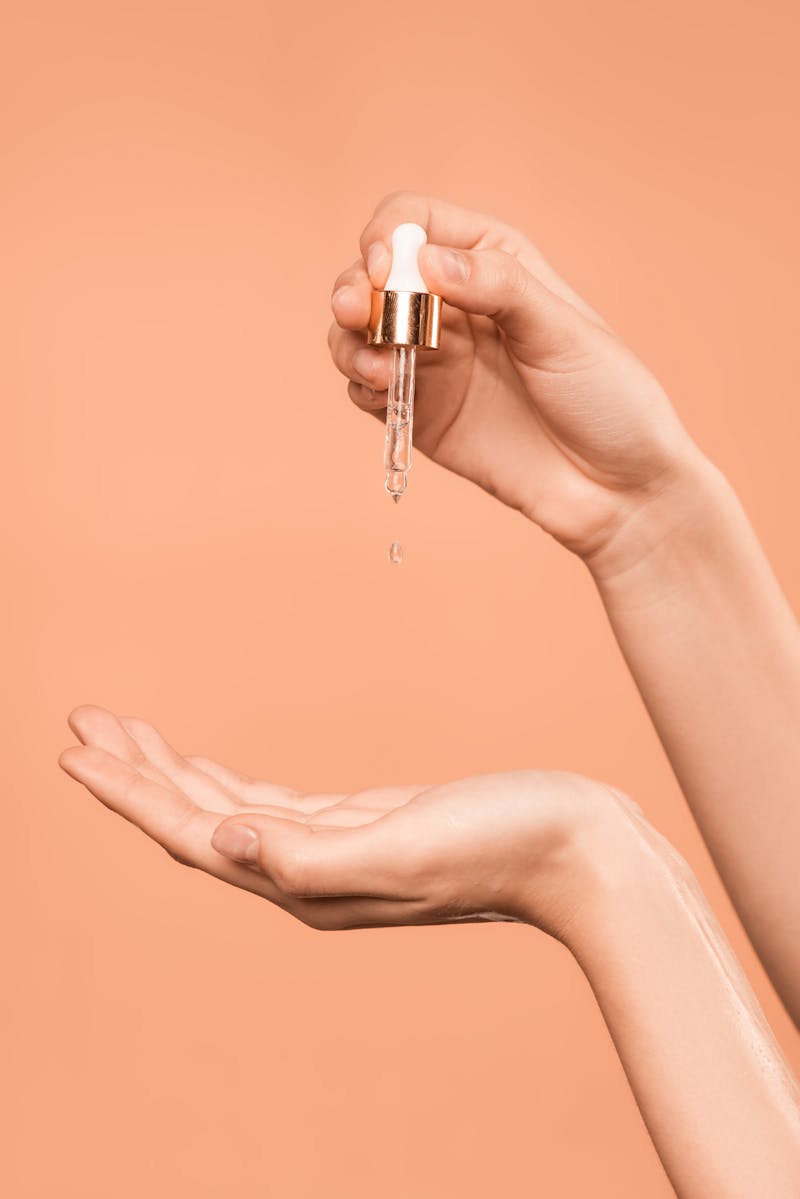
What are peptides, and why is every brand obsessed with them?
Peptides are short chains of amino acids — the building blocks of proteins like collagen and elastin. In theory, applying specific peptide sequences topically could signal skin cells to behave as if they're younger: producing more collagen, relaxing expression lines, or supporting barrier function.
The appeal is obvious: peptides sound scientific enough to justify a premium price tag. And the category is exploding — COSRX, Medicube, and dozens of other K-beauty brands now center entire product lines around peptide complexes. But "contains peptides" tells you about as much as "contains vitamins." The question isn't whether peptides exist in the product. It's whether they can actually reach the cells that matter.
Can peptides even penetrate the skin barrier?
This is the elephant in the room. Dermatological pharmacology has a well-known guideline called the 500 Dalton rule: molecules larger than 500 Daltons generally cannot pass through the stratum corneum, the skin's outermost barrier. Many popular peptides exceed this threshold.
The stratum corneum is a tightly organized lipid barrier — think of it as a brick wall made of dead skin cells cemented together by ceramides. It's designed to keep things out. And peptides, being hydrophilic (water-loving) molecules, face a double problem: they're too large and too water-soluble for a barrier that favors small, fat-soluble molecules.
Research published in Scientific Reports (Nature) confirmed that structural modification — making peptides more lipophilic or smaller — significantly improved skin permeation. Translation: unmodified peptides in a basic serum formula mostly sit on top of your skin. They hydrate. They don't signal.
- 500 Da
- The molecular weight cutoff for skin penetration — most peptides exceed this
- 3–5×
- Extra peptide loading needed to compensate for poor penetration in conventional formulas
Which peptides actually have clinical evidence?
Not all peptides are created equal. A few have legitimate clinical trials behind them — with published, peer-reviewed results. Here's the honest tier list.
- 🏅 Matrixyl (Palmitoyl Pentapeptide-4)
- The most-studied cosmetic peptide. Clinical trials show measurable improvements in the appearance of fine lines at 8–12 weeks. The palmitoyl chain helps it cross the lipid barrier better than most peptides. Look for Matrixyl 3000 (combines with palmitoyl tripeptide-1) at meaningful concentrations.
- 🏅 GHK-Cu (Copper Tripeptide-1)
- A naturally occurring peptide with 20–35% improvement in elasticity metrics in clinical trials at 12–16 weeks. Small molecular weight (403 Da) means it actually falls below the 500 Da cutoff — one of the few peptides that can genuinely penetrate. ana2me covered this one in depth already.
- 🥈 Argireline (Acetyl Hexapeptide-3)
- Marketed as "Botox in a bottle" — it aims to relax facial muscles to soften expression lines. Clinical studies show modest improvements after 30 days, but the effect is subtle and temporary. It works on a completely different mechanism than Botox and shouldn't be compared directly.
- ⚠️ Everything else
- Most "peptide complexes" on labels contain peptides with little or no published human clinical data. "Contains 6 peptides" sounds impressive — but if those peptides are at trace concentrations and can't penetrate the barrier, the number is meaningless. Watch for vague "peptide blend" language with no specific names.
How do you read a peptide product label without getting fooled?
The skincare industry has learned that "peptide" sells. That means you need to be a sharper reader. Here's what to look for — and what to ignore.
Products worth considering
- COSRX The 6 Peptide Skin Booster Serum — Names its peptides clearly (palmitoyl tripeptide-1, palmitoyl tetrapeptide-7 among them) and lists them at meaningful positions in the formula.
- Medicube PDRN Pink Peptide Glow Serum — Combines salmon PDRN with a five-peptide complex — pairs well with the PDRN for a firming-focused routine.
- The Ordinary "Buffet" Multi-Technology Peptide Serum — Transparent about its peptide blend (Matrixyl 3000 + Matrixyl Synthe'6 + Argirelox), affordable, and no inflated claims.
For informational purposes only. Not intended as medical or professional advice.
모든 K-뷰티 브랜드가 펩타이드를 넣고 있어요. 진짜 효과가 있을까요?
2026년, 모든 세럼 병에 '펩타이드'가 적혀 있어요. 하지만 대부분의 펩타이드 분자는 피부를 통과하지도 못해요. 진짜 임상 근거가 있는 펩타이드와 비싼 물의 차이를 알려드릴게요.
펩타이드가 뭔데, 왜 모든 브랜드가 집착할까?
펩타이드는 아미노산의 짧은 사슬이에요. 콜라겐이나 엘라스틴 같은 단백질의 기본 구성 요소죠. 이론적으로, 특정 펩타이드 서열을 피부에 바르면 세포가 더 젊게 반응하도록 신호를 보낼 수 있어요 — 콜라겐 생성을 돕거나, 표정 주름을 완화하거나, 장벽 기능을 지원하는 식으로요.
매력은 분명해요. 펩타이드는 프리미엄 가격을 정당화할 만큼 과학적으로 들려요. COSRX, 메디큐브를 비롯한 수많은 K-뷰티 브랜드가 펩타이드 복합체를 중심으로 제품 라인을 만들고 있죠. 하지만 '펩타이드 함유'는 '비타민 함유'만큼이나 모호한 말이에요. 문제는 펩타이드가 제품에 들어있느냐가 아니라, 실제로 중요한 세포까지 도달할 수 있느냐예요.
펩타이드가 피부 장벽을 통과하기는 할까?
이게 핵심 문제예요. 피부 약학에는 500달톤 규칙이라는 잘 알려진 기준이 있어요. 500달톤보다 큰 분자는 일반적으로 피부 최외곽 장벽인 각질층을 통과하지 못해요. 인기 펩타이드 중 많은 것이 이 기준을 초과하죠.
각질층은 촘촘하게 조직된 지질 장벽이에요. 죽은 피부 세포가 세라마이드로 단단히 결합된 벽돌담이라고 생각하면 돼요. 외부 물질을 차단하는 게 본래 역할이죠. 펩타이드는 친수성(물을 좋아하는) 분자라 이중 문제에 직면해요. 분자가 너무 크고, 너무 수용성이라 작고 지용성인 분자를 선호하는 장벽을 통과하기 어려워요.
Scientific Reports(Nature)에 실린 연구에 따르면, 펩타이드를 더 지용성으로 만들거나 크기를 줄이는 구조적 변형이 피부 투과율을 크게 높였어요. 쉽게 말해서, 기본 세럼에 들어있는 변형되지 않은 펩타이드는 대부분 피부 위에 머물러요. 보습은 하지만, 신호는 보내지 못해요.
- 500 Da
- 피부 투과 분자량 기준선 — 대부분의 펩타이드가 이를 초과
- 3~5배
- 기존 제형에서 낮은 투과율을 보상하기 위해 필요한 추가 펩타이드 함량
실제 임상 근거가 있는 펩타이드는 어떤 것들일까?
모든 펩타이드가 같지 않아요. 소수만이 동료 심사를 거친 출판된 결과물과 함께 정당한 임상 시험 데이터를 갖고 있어요. 솔직한 등급표를 보여드릴게요.
- 🏅 마트릭실 (팔미토일 펜타펩타이드-4)
- 가장 많이 연구된 화장품 펩타이드. 임상 시험에서 8~12주 사용 시 잔주름 외관의 측정 가능한 개선을 보여줬어요. 팔미토일 체인이 대부분의 펩타이드보다 지질 장벽을 더 잘 통과하도록 도와요. 의미 있는 농도의 마트릭실 3000(팔미토일 트리펩타이드-1 결합)을 찾아보세요.
- 🏅 GHK-Cu (구리 트리펩타이드-1)
- 자연 발생 펩타이드로, 12~16주 임상 시험에서 탄력 수치 20~35% 개선을 보여줬어요. 분자량이 403 Da로 작아서 500달톤 기준 이하 — 실제로 침투할 수 있는 몇 안 되는 펩타이드 중 하나예요. ana2me에서 이미 자세히 다뤘어요.
- 🥈 아르지렐린 (아세틸 헥사펩타이드-3)
- "바르는 보톡스"로 마케팅되는 성분 — 얼굴 근육을 이완시켜 표정 주름을 부드럽게 해요. 임상 연구에서 30일 후 완만한 개선을 보여줬지만, 효과가 미묘하고 일시적이에요. 보톡스와 완전히 다른 메커니즘으로 작용하며 직접 비교하면 안 돼요.
- ⚠️ 그 외 전부
- 라벨에 적힌 대부분의 '펩타이드 복합체'는 출판된 인체 임상 데이터가 거의 또는 전혀 없는 펩타이드를 포함해요. '6종 펩타이드 함유'가 인상적으로 들리지만, 미량 농도이고 장벽을 통과하지 못한다면 숫자는 무의미해요. 구체적 이름 없이 '펩타이드 블렌드'라고만 적힌 경우를 주의하세요.
펩타이드 제품 라벨을 속지 않고 읽는 법은?
스킨케어 업계는 '펩타이드'가 잘 팔린다는 걸 배웠어요. 그래서 더 날카로운 소비자가 되어야 해요. 무엇을 봐야 하고, 무엇을 무시해야 하는지 알려드릴게요.
고려할 만한 제품
- COSRX The 6 Peptide Skin Booster Serum — 펩타이드 이름을 명확히 밝히고 (팔미토일 트리펩타이드-1, 팔미토일 테트라펩타이드-7 포함), 제형 내 유의미한 위치에 배치.
- Medicube PDRN Pink Peptide Glow Serum — 연어 PDRN과 5종 펩타이드 복합체를 결합 — PDRN과 함께 탄력 중심 루틴에 적합.
- The Ordinary "Buffet" Multi-Technology Peptide Serum — 펩타이드 블렌드를 투명하게 공개하고 (마트릭실 3000 + 마트릭실 신세6 + 아르지렐록스), 합리적 가격에 과장 없는 제품.
본 콘텐츠는 정보를 제공하기 위한 것이며, 전문적인 의료 조언을 대신하지 않습니다.