Molecular Insights
Your Hyaluronic Acid Serum Might Be Drying Your Skin Out. Here's Why Molecular Weight Changes Everything.
Hyaluronic acid holds 1,000 times its weight in water. But if the molecules are the wrong size, they pull moisture out of your skin instead of into it.
May 30, 2026 · 7 min read
What Does "Molecular Weight" Mean for Hyaluronic Acid?
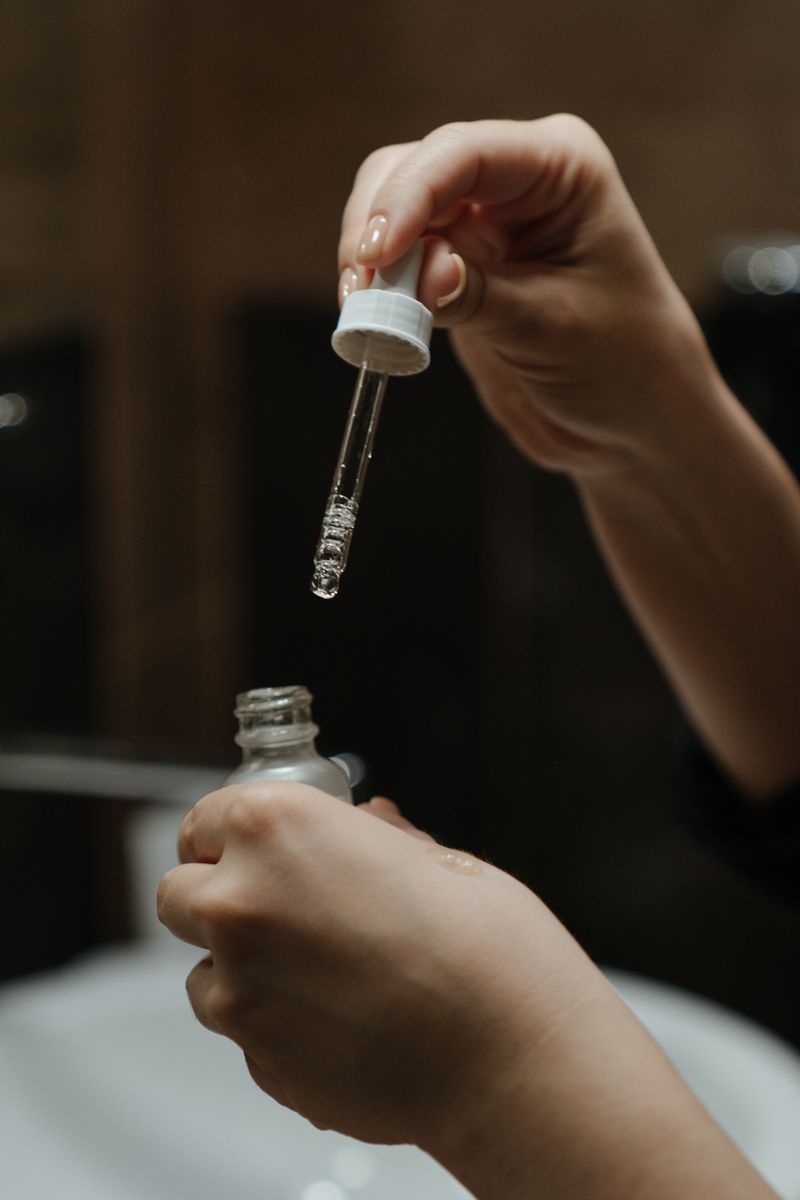
Hyaluronic acid isn't a single molecule — it's a polymer, a chain of repeating sugar units that can be thousands of links long or just a few dozen. The length of that chain is measured in kilodaltons (kDa), a unit of molecular mass. Here's why this matters for your skin: the stratum corneum — your outermost skin layer — acts as a gate. Molecules above roughly 500 daltons have a hard time getting through. A high molecular weight HA chain at 1,500 kDa is three thousand times too large to penetrate. It physically cannot pass. So when you apply a high-MW hyaluronic acid serum, you're not "hydrating deep." You're painting a moisture-attracting film on your skin's surface. That film is useful — it reduces water loss and makes skin feel plump immediately. But it's a surface effect, not a cellular one.
- High MW
- 1,000–1,800 kDa — sits on skin surface, forms a moisture-retaining film, reduces TEWL
- Medium MW
- 100–300 kDa — partial penetration into the upper stratum corneum
- Low MW
- 20–50 kDa — penetrates into the viable epidermis, 3x deeper than 300 kDa (study-backed)
Can Hyaluronic Acid Actually Dry Your Skin Out?
Yes — and this is the part nobody puts on the marketing label. Hyaluronic acid is a humectant: it draws water toward itself. In a humid environment (above ~60% relative humidity), it pulls moisture from the air into your skin. Excellent. But in dry environments — heated offices, airplane cabins, cold winter air, air-conditioned rooms — there's no atmospheric moisture to pull. So the HA reaches for the next available water source: your skin's deeper layers. Low molecular weight HA is especially prone to this because it actually penetrates into the epidermis, where it can draw water upward and outward. Without an occlusive layer on top to trap that moisture, it evaporates — and your skin ends up drier than before you applied anything. This is the "hyaluronic acid paradox": the ingredient famous for hydration can cause dehydration if used incorrectly.
What Molecular Weight of Hyaluronic Acid Should You Use?
The answer isn't "low" or "high" — it's both. A well-formulated hyaluronic acid product layers multiple molecular weights in one formula. The high-MW chains sit on the surface and form a protective film. The medium-MW chains hydrate the upper stratum corneum. The low-MW chains penetrate into the viable epidermis and deliver water where your cells actually use it. This is why multi-weight HA serums consistently outperform single-weight ones in both clinical testing and consumer satisfaction. You need the lid and the delivery system — one without the other leaves gaps. What to look for on the ingredient list: • Sodium Hyaluronate — the salt form, smaller than pure HA, better penetration • Hydrolyzed Hyaluronic Acid — enzymatically broken into smaller fragments • Sodium Hyaluronate Crosspolymer — cross-linked for sustained release on the surface • Sodium Acetylated Hyaluronate — modified for better skin adhesion If your serum lists only one type of HA, it's likely a single molecular weight — and you're missing either the surface film or the deep penetration.
- Apply to damp skin
- HA needs water to work with. Apply immediately after cleansing while skin is still wet — this gives the humectant something to hold onto besides your deeper skin layers.
- Seal with an occlusive
- Follow HA with a cream or oil containing occlusives like squalane, shea butter, or petrolatum. This traps the water HA attracted and prevents evaporation.
- Layer, don't overdose
- More HA doesn't mean more hydration. 2-3 drops of a well-formulated multi-weight serum is plenty. Excess HA can actually create a tacky film that pills under moisturizer.
For informational purposes only. Not intended as medical or professional advice.
Which Multi-Weight HA Serums Actually Deliver?
- Torriden DIVE-IN Low Molecular Hyaluronic Acid Serum — 5-weight HA complex with panthenol — the K-beauty bestseller for a reason
- Isntree Hyaluronic Acid Toner Plus — Multi-weight HA with beta-glucan and glyceryl glucoside for barrier + hydration
- COSRX Hyaluronic Acid Intensive Cream — Cream format with HA + ceramides — the built-in occlusive for dry climates
- Laneige Water Bank Blue Hyaluronic Serum — Blue HA technology with multi-weight system targeting different skin layers
히알루론산 세럼이 오히려 피부를 건조하게 만들 수 있어요. 분자량이 전부를 바꾸는 이유
히알루론산은 자기 무게의 1,000배 수분을 품어요. 하지만 분자 크기가 맞지 않으면 피부에 수분을 넣는 게 아니라 빼앗길 수 있습니다.
히알루론산에서 '분자량'이란 무엇을 의미할까요?
히알루론산은 하나의 분자가 아니에요 — 반복되는 당 단위가 사슬처럼 연결된 폴리머(고분자)예요. 사슬이 수천 개일 수도 있고 수십 개일 수도 있죠. 이 사슬의 길이를 킬로달톤(kDa)이라는 분자량 단위로 측정해요. 이게 왜 중요하냐면, 피부의 가장 바깥층인 각질층이 문지기 역할을 하기 때문이에요. 대략 500달톤 이상의 분자는 통과하기 어려워요. 1,500 kDa짜리 고분자 히알루론산은 침투 가능 크기의 3,000배나 커요. 물리적으로 통과가 불가능해요. 그래서 고분자 히알루론산 세럼을 바르면 "깊은 보습"이 되는 게 아니에요. 피부 표면에 수분을 끌어당기는 막을 칠하는 거예요. 이 막도 유용해요 — 수분 손실을 줄이고 즉각적으로 탱탱한 느낌을 줘요. 하지만 표면 효과이지, 세포 수준의 보습은 아닙니다.
- 고분자
- 1,000–1,800 kDa — 피부 표면에 남아 수분 보호막 형성, 경피수분손실 감소
- 중분자
- 100–300 kDa — 각질층 상부까지 부분적으로 침투
- 저분자
- 20–50 kDa — 살아있는 표피까지 침투, 300 kDa보다 3배 깊이 도달 (연구 결과)
히알루론산이 실제로 피부를 건조하게 만들 수 있나요?
네 — 그리고 이 부분은 어떤 마케팅에서도 말해주지 않아요. 히알루론산은 습윤제(humectant)예요: 자기 쪽으로 수분을 끌어당겨요. 습도가 높은 환경(상대습도 60% 이상)에서는 공기 중 수분을 피부로 끌어와요. 완벽하죠. 하지만 건조한 환경 — 난방된 사무실, 비행기 안, 차가운 겨울 공기, 에어컨 켠 방 — 에서는 끌어올 공기 중 수분이 없어요. 그래서 HA는 가장 가까운 수분원을 찾아요: 피부 깊은 층의 수분이에요. 저분자 히알루론산은 실제로 표피 안으로 침투하기 때문에 이 현상이 더 심해요. 깊은 곳의 수분을 위로, 바깥으로 끌어올리고, 위에 밀봉층이 없으면 그대로 증발해요 — 결국 아무것도 안 바른 것보다 더 건조해져요. 이것이 "히알루론산 패러독스"예요: 보습으로 유명한 성분이 잘못 사용하면 오히려 탈수를 일으킬 수 있어요.
어떤 분자량의 히알루론산을 써야 할까요?
정답은 "저분자" 또는 "고분자"가 아니에요 — 둘 다예요. 잘 만든 히알루론산 제품은 하나의 포뮬러에 여러 분자량을 겹쳐 넣어요. 고분자는 표면에서 보호막을 형성하고, 중분자는 각질층 상부를 적셔주고, 저분자는 살아있는 표피까지 침투해서 세포가 실제로 쓸 수 있는 곳에 수분을 전달해요. 멀티 분자량 세럼이 단일 분자량 제품보다 임상과 소비자 만족도 모두에서 꾸준히 앞서는 이유가 이거예요. 뚜껑과 전달 시스템이 모두 필요해요 — 하나만으로는 빈틈이 생겨요. 성분표에서 찾아볼 것: • 소듐 히알루로네이트 — 순수 HA보다 작은 염 형태, 침투력 우수 • 가수분해 히알루론산 — 효소로 더 작게 분해한 조각 • 소듐 히알루로네이트 크로스폴리머 — 교차 결합, 표면에서 지속 방출 • 소듐 아세틸레이티드 히알루로네이트 — 피부 부착력을 높인 변형 형태 세럼에 HA가 한 종류만 적혀 있다면 단일 분자량일 가능성이 높아요 — 표면 막이든 깊은 침투든 한쪽이 빠져 있다는 뜻이에요.
- 젖은 피부에 바르기
- HA는 함께 일할 수분이 필요해요. 세안 후 피부가 아직 젖어 있을 때 바로 바르세요 — 습윤제가 피부 깊은 층 대신 붙잡을 수분을 제공하는 거예요.
- 밀봉제로 마무리
- HA 위에 스쿠알란, 시어버터, 페트롤라툼 같은 밀봉 성분이 든 크림이나 오일을 덧발라요. HA가 끌어모은 수분을 가두고 증발을 막아줘요.
- 겹치기, 과용 금지
- HA를 많이 바른다고 보습이 더 되는 게 아니에요. 잘 만든 멀티 분자량 세럼 2-3방울이면 충분해요. 너무 많으면 끈적한 막이 생겨서 크림 밑에서 밀릴 수 있어요.
본 콘텐츠는 정보를 제공하기 위한 것이며, 전문적인 의료 조언을 대신하지 않습니다.
멀티 분자량 히알루론산 세럼, 어떤 게 진짜 효과 있을까요?
- Torriden DIVE-IN Low Molecular Hyaluronic Acid Serum — 5종 분자량 HA + 판테놀 — K-뷰티 베스트셀러인 이유가 있어요
- Isntree Hyaluronic Acid Toner Plus — 멀티 분자량 HA에 베타글루칸과 글리세릴 글루코사이드 — 장벽과 보습 동시에
- COSRX Hyaluronic Acid Intensive Cream — HA + 세라마이드 크림 포맷 — 건조한 환경을 위한 내장형 밀봉제
- Laneige Water Bank Blue Hyaluronic Serum — 블루 HA 기술로 각 피부층을 타겟하는 멀티 분자량 시스템