Nutritional Intelligence
Korea's Inner Beauty Supplements Are Going Global. Do Collagen Jellies and Probiotic Sachets Actually Work?
By J. Yoo
BB Lab collagen jellies. Lacto-Fit probiotic sachets. Esther Wellness glutathione strips. Korean inner beauty supplements just crossed $2 billion in US sales — but the science behind them is more nuanced than the marketing.
June 12, 2026 · 7 min read
Why Are Korean Beauty Supplements Suddenly Everywhere?
K-beauty broke $2 billion in US sales in 2025. But the next wave isn't another serum — it's what you swallow. Korean brands like BB Lab, Lacto-Fit, and Esther Wellness have turned supplements into single-serve daily rituals that feel more like snacks than medicine. Collagen comes in chewy jelly sticks. Probiotics come in flavored powder sachets. Glutathione comes in dissolvable oral strips. The format innovation is pure Korea — make it convenient, make it delicious, make it part of the routine.
- $2B+
- K-beauty US sales in 2025, up from .5B the year before — supplements are the fastest-growing segment5.4B
- Projected global inner beauty market by 2030
- 4–8 weeks
- Minimum time to see skin changes from oral collagen supplementation in clinical trials
Does Oral Collagen Actually Reach Your Skin?
This is the core question, and the research is clearer than you'd expect. A systematic review of 11 randomized controlled trials (805 participants) found that oral collagen supplementation significantly improved skin hydration, elasticity, and the appearance of fine lines compared to placebo. The key is the form: hydrolyzed collagen peptides — proteins broken down small enough (2,000–5,000 daltons) to survive digestion and reach the bloodstream.
What About Probiotics and Glutathione — Do They Work for Skin?
The evidence is more mixed here. Probiotics work through the gut-skin axis — the connection between gut microbiome health, immune signaling, and skin condition. Specific strains (like Lactobacillus and Bifidobacterium) have shown promise for skin comfort and clarity in some studies, but strain specificity matters enormously. A generic probiotic isn't automatically a skin probiotic.
Glutathione — the antioxidant behind Esther Wellness's viral oral strips — has been studied for its association with skin tone and brightness. Some small studies suggest oral glutathione may support an even-looking complexion over 4–12 weeks, but the evidence base is still early compared to collagen. The oral strip format does offer one advantage: sublingual absorption bypasses the digestive system.
How Should You Choose a Korean Beauty Supplement?
- Check the dose
- For collagen: look for 2,500–10,000mg of hydrolyzed collagen peptides per serving. Below 1,000mg is unlikely to deliver clinical-level results.
- Check the strain
- For probiotics: the specific strain matters more than the CFU count. Look for strains that have been studied for skin, not just digestion.
- Commit to 8 weeks
- Inner beauty is slow beauty. Most clinical trials show meaningful results at 4–8 weeks minimum. Expect nothing at 1 week.
- Format doesn't matter
- Jelly, powder, drink, strip — pick what you'll actually take daily. The best supplement is the one you don't skip.
For informational purposes only. Not intended as medical or professional advice.
Which Korean Inner Beauty Supplements Are Worth Trying?
- BB Lab Low Molecular Collagen Jelly Stick — Chewy jelly format with hydrolyzed fish collagen. Korea's top-selling collagen brand — easy to carry, easy to take daily.
- Lacto-Fit Probiotics Beauty — Korea's #1 probiotic brand. Beauty version adds micro-collagen peptide to the probiotic base. Blueberry-flavored sachet.
- Esther Formula Glutathione Direct Film — Dissolvable oral strip for sublingual absorption. Glutathione associated with brightness and even skin tone.
- Foodology Collagen Booster Shot — Ready-to-drink ampoule with 5,000mg VERISOL collagen per serving. Clinical-grade dose in a single shot.
한국 이너뷰티가 세계로 간다. 콜라겐 젤리와 유산균 스틱, 진짜 효과 있을까?
BB Lab 콜라겐 젤리, 락토핏 유산균 스틱, 에스더포뮬러 글루타치온 스트립. 한국 이너뷰티가 미국에서 20억 달러를 넘었는데 — 과학은 마케팅만큼 단순하지 않아요.
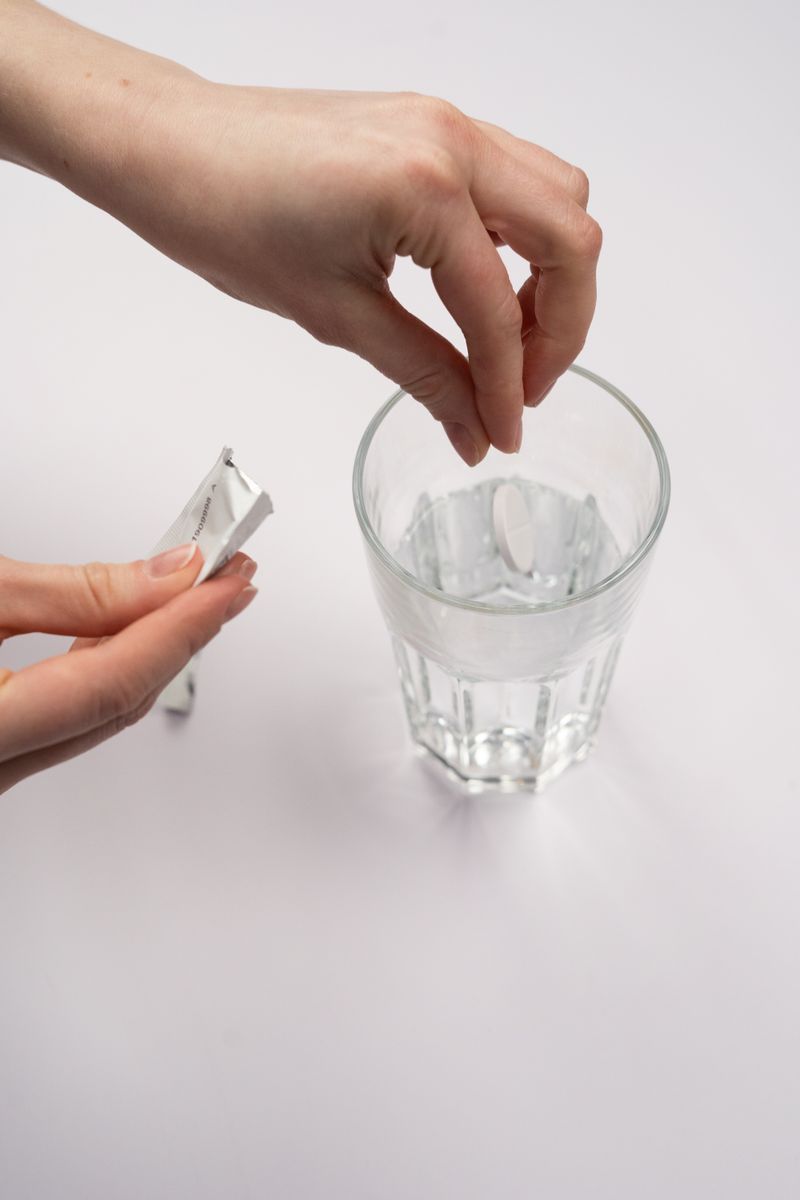
Effervescent supplement tablet dissolving in a glass of water · Pexels 한국 뷰티 보충제가 갑자기 왜 이렇게 많아진 걸까?
K-뷰티가 2025년 미국 매출 20억 달러를 넘었어요. 그런데 다음 물결은 세럼이 아니라 — 먹는 거예요. BB Lab, 락토핏, 에스더포뮬러 같은 한국 브랜드들이 보충제를 약이 아니라 간식처럼 느껴지는 일일 루틴으로 만들었어요. 콜라겐은 젤리 스틱으로, 유산균은 맛 있는 파우더 스틱으로, 글루타치온은 입안에서 녹는 필름으로. 제형 혁신은 순수 한국식이에요 — 편리하게, 맛있게, 루틴의 일부로.
- 20억 달러+
- 2025년 K-뷰티 미국 매출, 전년 15억 달러에서 성장 — 보충제가 가장 빠르게 성장하는 분야
- 154억 달러
- 2030년까지 예상되는 글로벌 이너뷰티 시장 규모
- 4~8주
- 임상시험에서 경구 콜라겐 보충으로 피부 변화를 보기까지 최소 시간
먹는 콜라겐이 진짜 피부까지 도달할까?
핵심 질문이에요. 그리고 연구 결과는 예상보다 명확해요. 11개 무작위 대조 시험(805명)을 분석한 체계적 리뷰에서 경구 콜라겐 보충이 위약 대비 피부 수분, 탄력, 잔주름 외관을 유의하게 개선한다고 나왔어요. 핵심은 형태예요: 가수분해 콜라겐 펩타이드 — 소화를 견디고 혈류에 도달할 만큼 작게(2,000~5,000달톤) 분해된 단백질이에요.
유산균과 글루타치온은 — 피부에 효과 있을까?
여기서부터 근거가 좀 엇갈려요. 유산균은 장-피부 축을 통해 작용해요 — 장내 미생물 건강, 면역 신호, 피부 상태 사이의 연결이에요. 특정 균주(락토바실러스, 비피도박테리움 등)가 일부 연구에서 피부 편안함과 맑은 느낌에 가능성을 보였지만, 균주 특이성이 엄청나게 중요해요. 일반 유산균이 자동으로 피부 유산균이 되는 건 아니에요.
글루타치온 — 에스더포뮬러의 바이럴 구강 스트립 뒤에 있는 항산화제 — 은 피부 톤과 밝기와의 연관성이 연구되어 왔어요. 일부 소규모 연구에서 경구 글루타치온이 4~12주에 걸쳐 균일한 피부 톤을 지원할 수 있다고 시사하지만, 콜라겐 대비 근거 기반은 아직 초기 단계예요. 구강 스트립 제형은 한 가지 장점이 있어요: 설하 흡수가 소화 시스템을 우회해요.
한국 뷰티 보충제, 어떻게 골라야 할까?
- 용량 확인
- 콜라겐: 1회 섭취량당 가수분해 콜라겐 펩타이드 2,500~10,000mg을 찾으세요. 1,000mg 미만은 임상 수준의 결과를 주기 어려워요.
- 균주 확인
- 유산균: CFU 수보다 특정 균주가 더 중요해요. 소화가 아닌 피부 연구가 된 균주를 찾으세요.
- 8주는 투자하세요
- 이너뷰티는 느린 뷰티예요. 대부분의 임상시험이 최소 4~8주에 유의한 결과를 보여요. 1주 만에 기대하지 마세요.
- 제형은 상관없어요
- 젤리, 파우더, 드링크, 스트립 — 매일 실제로 먹을 수 있는 걸 고르세요. 최고의 보충제는 안 빼먹는 거예요.
본 콘텐츠는 정보를 제공하기 위한 것이며, 전문적인 의료 조언을 대신하지 않습니다.
어떤 한국 이너뷰티 보충제가 써볼 만할까?
- BB Lab Low Molecular Collagen Jelly Stick — 가수분해 어류 콜라겐이 든 츄이 젤리 스틱. 한국 콜라겐 판매 1위 브랜드 — 휴대 간편, 매일 섭취 용이.
- Lacto-Fit Probiotics Beauty — 한국 유산균 1위 브랜드. 뷰티 버전은 유산균 베이스에 마이크로 콜라겐 펩타이드 추가. 블루베리맛 스틱.
- Esther Formula Glutathione Direct Film — 설하 흡수를 위한 구강 용해 필름. 글루타치온은 밝고 균일한 피부 톤과 연관돼요.
- Foodology Collagen Booster Shot — 1회분당 VERISOL 콜라겐 5,000mg이 들어간 즉석 음용 앰플. 한 병에 임상 용량.