Molecular Insights
Your Body Has Been Using Your Face's Leftovers. K-Beauty Says That's Over.
Body retinol. Body niacinamide. Body AHA. The $22 billion body care market is finally getting the same active ingredients your face has had for a decade — and the science says your neck-down skin deserves them.
May 31, 2026 · 7 min read
Why Does Your Body Skin Need Active Ingredients — Isn't It Tougher Than Your Face?
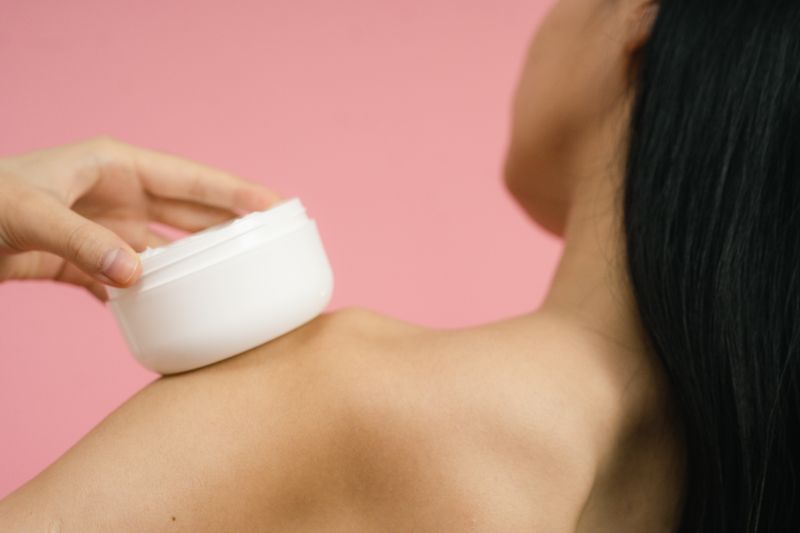
Body skin is thicker than facial skin — the epidermis on your arms and legs can be 2–3 times thicker than the delicate skin around your eyes. This is true. But thickness doesn't mean invulnerability. Body skin faces the same aging processes as your face: collagen loss (roughly 1% per year after 20), ceramide depletion, slowed cell turnover, and UV damage. The difference is that nobody was treating it. For decades, body care meant a basic moisturizer — maybe fragrance-forward, maybe dermatologist-recommended for dryness, but never formulated with the active ingredients that facial skincare has relied on since the 1980s. The areas that suffer most visibly: upper arms (keratosis pilaris — those rough "chicken skin" bumps), chest and décolletage (sun damage and crepey texture), knees and elbows (hyperpigmentation and roughness), and legs (dryness, uneven tone, and ingrown hairs). Each of these has a solution in facial skincare that was simply never packaged for the body — until now.
- 42%
- Growth in prestige body serum sales in Europe (Jan–Aug 2025 vs 2024)
- $22.3B
- Global body care market value — Euromonitor forecasts 6.4% growth in 2026
- 2–3x
- Body skin is thicker than facial skin — which means actives often need higher concentrations to work
Which Facial Actives Actually Work on the Body — and Which Don't?
Retinol works — and body skin can tolerate higher concentrations than your face. Body retinol products typically range from 0.1–0.5%, compared to the 0.025–0.1% that facial skin often starts with. It supports cell turnover, which helps with rough texture, uneven tone, and crepey skin on the chest and arms. Apply at night and use sunscreen on exposed areas the next day. AHAs (glycolic acid, lactic acid) are arguably the most effective body actives. Lactic acid at 10–12% smooths keratosis pilaris and rough patches. Glycolic acid helps with hyperpigmentation on knees, elbows, and inner thighs. These are the ingredients that transform body skin texture most visibly. Niacinamide translates directly — barrier support, brightening, and sebum balance work the same way on body skin. Particularly useful for back and chest breakouts. Peptides and ceramides support firmness and barrier function everywhere. No concentration adjustment needed. Vitamin C is trickier on the body. The high volume of product needed makes unstable L-ascorbic acid impractical (it oxidizes before you use the bottle). Stable derivatives like ascorbyl glucoside work better in body formats.
What Does a Proper Body Skincare Routine Look Like?
You don't need a 7-step body routine. Three products, used consistently, cover most concerns:
- Step 1: Exfoliating body wash (2–3x/week)
- An AHA or BHA body wash handles surface buildup, ingrown hairs, and rough texture. Use 2–3 times per week, not daily — your body's acid mantle needs recovery time too. Leave on for 60 seconds before rinsing for better contact.
- Step 2: Active body lotion (daily)
- This is the real game-changer. A body lotion with niacinamide, lactic acid, or retinol does the sustained work — brightening, smoothing, and supporting barrier function over weeks. Apply to damp skin after showering for better absorption.
- Step 3: Body SPF (exposed areas)
- If you're using retinol or AHAs on your body, sun protection is non-negotiable on exposed areas. Spray SPFs make body application realistic. The chest and hands age fastest after the face — protect them.
For informational purposes only. Not intended as medical or professional advice.
Body Skincare Products Worth Starting With
- Paula's Choice Skin-Smoothing Retinol Body Treatment — 0.1% retinol in a lightweight body lotion — the gold standard for body retinol
- Some By Mi AHA BHA PHA 30 Days Miracle Acne Body Cleanser — Triple-acid body wash for texture and breakouts — K-beauty's most popular body exfoliant
- APLB Glutathione Niacinamide Body Lotion — Niacinamide + glutathione + centella — lightweight K-beauty body lotion for brightening and barrier
- Medicube Red Body Wash — Salicylic acid + lactic acid body wash with niacinamide — exfoliation meets hydration
몸은 그동안 얼굴 남은 거 발라왔잖아요. K-뷰티가 이제 그만하래요
바디 레티놀. 바디 나이아신아마이드. 바디 AHA. 22조 원 규모의 바디케어 시장이 드디어 얼굴에만 쓰던 활성 성분을 받아들이고 있어요.
몸 피부에도 활성 성분이 필요한 이유 — 얼굴보다 튼튼하지 않나요?
몸 피부가 얼굴보다 두꺼운 건 맞아요 — 팔다리 표피가 눈가 피부보다 2~3배 두꺼울 수 있거든요. 하지만 두껍다고 안 늙는 건 아니에요. 몸 피부도 얼굴과 같은 노화를 겪어요: 콜라겐 감소(20대 이후 연간 약 1%), 세라마이드 고갈, 세포 교체 속도 저하, 자외선 손상. 차이점은 아무도 관리를 안 했다는 거예요. 수십 년간 바디케어란 기본 보습제가 전부였어요 — 향이 좋거나 건조함에 도움되는 정도였지, 얼굴 스킨케어가 1980년대부터 써온 활성 성분은 들어간 적이 없었죠. 가장 눈에 띄게 문제가 되는 부위가 있어요: 팔 윗부분(모공각화증 — 일명 '닭살'), 가슴과 데콜테(자외선 손상과 잔주름), 무릎과 팔꿈치(색소침착과 거칠음), 다리(건조함, 불균일한 톤, 인그로운 헤어). 사실 얼굴 스킨케어에는 각각의 해결책이 이미 있었는데, 바디용으로 제형화한 적이 없었을 뿐이에요.
- 42%
- 유럽 프리미엄 바디 세럼 매출 성장률 (2025년 1~8월 전년 대비)
- 22.3조 원
- 글로벌 바디케어 시장 규모 — 유로모니터, 2026년 6.4% 성장 전망
- 2~3배
- 몸 피부는 얼굴보다 두꺼워요 — 활성 성분이 더 높은 농도로 필요할 수 있다는 뜻
얼굴용 활성 성분 중 몸에도 효과 있는 건 뭘까요?
레티놀은 몸에도 효과 있어요 — 게다가 얼굴보다 높은 농도를 견딜 수 있어요. 바디 레티놀 제품은 보통 0.1~0.5% 범위인데, 얼굴은 0.025~0.1%에서 시작하는 경우가 많거든요. 세포 교체를 도와서 거친 질감, 불균일한 톤, 가슴·팔의 잔주름에 좋아요. 밤에 바르고 다음 날 노출 부위에 자외선 차단제를 쓰세요. AHA(글리콜산, 젖산)는 바디 활성 성분 중 가장 효과적이라 해도 과언이 아니에요. 젖산 10~12%는 모공각화증과 거친 부위를 매끄럽게 해줘요. 글리콜산은 무릎, 팔꿈치, 허벅지 안쪽의 색소침착에 도움이 돼요. 바디 피부의 질감을 가장 눈에 띄게 바꿔주는 성분이에요. 나이아신아마이드는 그대로 적용돼요 — 장벽 지지, 브라이트닝, 피지 조절이 몸 피부에서도 똑같이 작동해요. 등이나 가슴 트러블에 특히 유용해요. 펩타이드와 세라마이드는 탄력과 장벽 기능을 어디서든 지원해요. 농도 조절이 따로 필요 없어요. 비타민 C는 몸에 쓰기 좀 까다로워요. 필요한 제품량이 많아서 불안정한 L-아스코르빅산은 병을 다 쓰기 전에 산화돼요. 아스코르빌 글루코사이드 같은 안정형 유도체가 바디 제형에 더 맞아요.
제대로 된 바디 스킨케어 루틴은 어떻게 생겼을까요?
7단계 바디 루틴이 필요한 건 아니에요. 세 가지 제품을 꾸준히 쓰면 대부분의 고민을 커버할 수 있어요:
- 1단계: 각질 케어 바디워시 (주 2~3회)
- AHA 또는 BHA 바디워시가 표면 각질, 인그로운 헤어, 거친 질감을 관리해요. 매일이 아니라 주 2~3회 사용하세요 — 몸의 산성 보호막도 회복 시간이 필요해요. 헹구기 전 60초 정도 두면 더 효과적이에요.
- 2단계: 활성 성분 바디로션 (매일)
- 여기가 진짜 차이를 만드는 단계예요. 나이아신아마이드, 젖산, 또는 레티놀이 든 바디로션이 브라이트닝, 매끄러움, 장벽 기능을 꾸준히 지원해요. 샤워 후 축축한 피부에 발라야 흡수가 나아요.
- 3단계: 바디 자외선 차단 (노출 부위)
- 레티놀이나 AHA를 몸에 쓰고 있다면, 노출 부위의 자외선 차단은 필수예요. 스프레이 자외선 차단제가 바디 도포를 현실적으로 만들어줘요. 얼굴 다음으로 빨리 노화하는 곳이 가슴과 손이에요.
본 콘텐츠는 정보를 제공하기 위한 것이며, 전문적인 의료 조언을 대신하지 않습니다.
바디 스킨케어, 이것부터 시작해보세요
- Paula's Choice Skin-Smoothing Retinol Body Treatment — 0.1% 레티놀 바디로션 — 바디 레티놀의 기준이 되는 제품
- Some By Mi AHA BHA PHA 30 Days Miracle Acne Body Cleanser — 트리플 산 바디워시 — 질감과 트러블 관리에 K-뷰티에서 가장 인기 있는 바디 각질 케어
- APLB Glutathione Niacinamide Body Lotion — 나이아신아마이드 + 글루타치온 + 센텔라 — 브라이트닝과 장벽 케어를 위한 가벼운 K-뷰티 바디로션
- Medicube Red Body Wash — 살리실산 + 젖산 + 나이아신아마이드 바디워시 — 각질 케어와 보습을 동시에