Molecular Insights
Cloudglow Skin Is 2026's Answer to Glass Skin. What Changed — and How Do You Get It?
Glass skin was wet and reflective. Cloudglow is soft, diffused, and lit from within — like sunlight through a cloud. Here's the optics, the ingredients, and the routine.
May 19, 2026 · 7 min read
What Is Cloudglow Skin — and Why Did Glass Skin Fall Out of Favor?
Glass skin was K-beauty's most exported aesthetic — a wet, ultra-reflective, glazed-donut finish achieved by stacking hydrating layers until the face looked like polished crystal. It worked brilliantly in studio lighting and Instagram flats. It worked less brilliantly on a humid Seoul subway platform at 2 p.m.
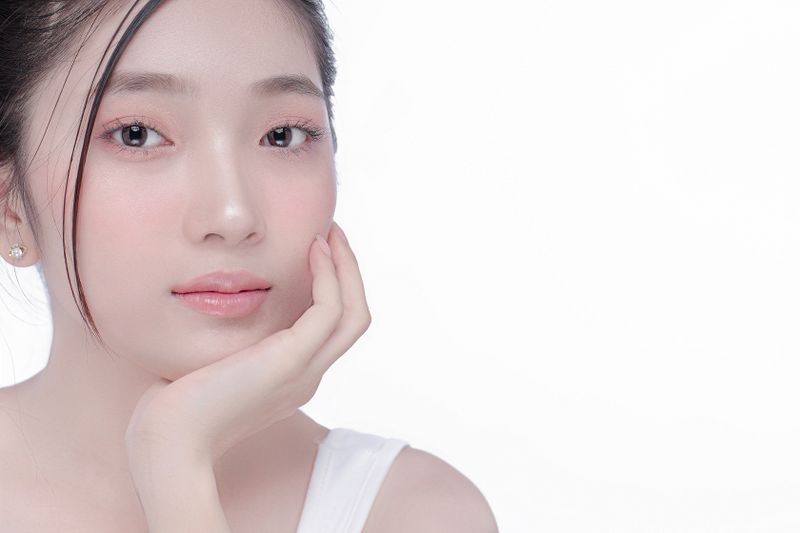
Cloudglow is the correction. Picture the way sunlight glows through a cloud — soft, diffused, dimensionally radiant rather than wet and reflective. The skin appears to be lit from within rather than coated from without. It's still luminous, but the luminosity is quieter. Think satin, not cellophane.
- 3 Forces Behind the Shift
- Filter fatigue from HD video calls, climate practicality (glass skin melts in humidity), and the skip-care movement toward fewer, smarter products
- Not Anti-Glow — Anti-Shine
- Cloudglow doesn't eliminate radiance. It shifts the source — from surface reflection to subsurface light scattering driven by healthy skin structure
How Does Skin Actually Glow Without Shine? The Optics Explained
The difference between shine and glow is physics, not vibes. Shine happens when light hits a smooth, oily surface and reflects straight back at one angle — specular reflection. It's bright in one spot, flat everywhere else. Glow happens when light penetrates the outer layer of skin and scatters through the translucent tissue beneath before exiting at many angles — a phenomenon called subsurface scattering.
This is why no amount of highlighter replicates real cloudglow. Highlighter adds specular reflection on top of skin. Cloudglow comes from the structural quality of the skin itself — tight junctions, uniform cell turnover, optimal hydration in the stratum corneum, and intact ceramide-cholesterol-fatty acid ratios in the lipid barrier.
What Ingredients Build Cloudglow Skin From the Inside Out?
Since cloudglow is a structural outcome rather than a topical effect, the ingredients that matter are the ones that repair, protect, and refine the skin's architecture. Here's what actually moves the needle:
- Niacinamide (Vitamin B3)
- Increases ceramide synthesis in the stratum corneum, strengthening the lipid barrier. A stronger barrier scatters light more evenly. At 4-5% concentration, it also regulates sebum — reducing the specular shine that undermines cloudglow.
- Peptides (Palmitoyl Tripeptide, Copper Peptide)
- Signal fibroblasts to produce collagen and elastin — the dermal proteins that light bounces off during subsurface scattering. More organized collagen fibers = more uniform light exit = softer glow.
- Vitamin C (Ascorbic Acid)
- Inhibits tyrosinase to reduce uneven melanin deposits that create dark patches. Uneven pigmentation absorbs light instead of letting it scatter — removing those patches makes light transmission more uniform.
- Gentle Exfoliants (PHA, Low-Dose AHA)
- Remove irregularly stacked dead cells that create micro-shadows on the skin surface. PHAs (gluconolactone) are preferred for cloudglow because they exfoliate without stripping — keeping the barrier intact while smoothing the light-scattering surface.
- Fermented Extracts (Galactomyces, Bifida)
- Microbial fermentation pre-digests nutrients into smaller molecules with higher bioavailability. These amino acids, vitamins, and polysaccharides feed the barrier repair machinery and support the skin's natural moisturizing factor (NMF).
- Hyaluronic Acid (Multi-Weight)
- High-molecular-weight HA sits on the surface and creates a hydration film. Low-molecular-weight HA penetrates deeper to plump cells from within. The combination creates volume without surface oil — the cloudglow sweet spot.
How Do You Build a Cloudglow Routine? The 3-Layer Framework
Glass skin required 7-10 steps. Cloudglow requires three layers — and the discipline to stop there. The entire philosophy aligns with Korea's skip-care movement: fewer products, each one earning its place.
Does Cloudglow Work for Oily Skin — or Is It Just Another Dry-Skin Trend?
This is where cloudglow actually has an advantage over glass skin. Glass skin amplified oily skin's natural shine, making it look greasy rather than glowy. Cloudglow's soft-focus finish absorbs excess sebum reflectivity while maintaining the inner luminosity. The silica particles in blurring primers are oil-absorbing by nature — they soak up sebum while continuing to scatter light.
For oily skin types, the key adjustment is Layer 1: use a gel-cream with niacinamide instead of a cream moisturizer. Niacinamide at 4-5% reduces sebum production at the sebaceous gland level. Less surface oil means less specular glare and more room for the soft diffused glow to come through.
Cloudglow Products Worth Trying
- SKIN1004 Madagascar Centella Tone Brightening Capsule Ampoule — Niacinamide + centella in micro-capsules. Brightens without surface shine — delivers barrier repair and tone correction in one step.
- Laneige Neo Cushion Matte — Soft-matte finish with blurring powder technology. Absorbs oil while maintaining skin-like luminosity — the textbook cloudglow base.
- Innisfree No-Sebum Mineral Pact — Ultra-fine Jeju mineral powder that mattifies without caking. Perfect for the Layer 3 light-dusting step — sets the veil without killing the glow.
- COSRX The Niacinamide 15 Serum — High-concentration niacinamide for barrier ceramide synthesis and sebum regulation. The structural foundation that makes cloudglow possible over time.
- Beauty of Joseon Glow Deep Serum (Rice + Alpha-Arbutin) — Rice bran extract for natural light diffusion + alpha-arbutin for even pigmentation. Addresses both the optical and structural sides of cloudglow.
For informational purposes only. Not intended as medical or professional advice.
클라우드글로우 스킨, 글래스 스킨을 대체한 2026년의 새로운 정답
글래스 스킨은 촉촉하고 반짝였어요. 클라우드글로우는 구름 사이로 비치는 햇살처럼 부드럽게 빛나는 피부예요. 그 과학과 루틴을 정리했어요.
클라우드글로우 스킨이란 무엇이고, 글래스 스킨은 왜 밀려났을까요?
글래스 스킨은 K-뷰티가 세계에 수출한 가장 대표적인 미감이었어요. 수분 레이어를 겹겹이 쌓아 유리처럼 반짝이는 피부를 만드는 거였죠. 스튜디오 조명과 인스타그램에서는 완벽했어요. 오후 2시, 습한 서울 지하철 안에서는 좀 덜 완벽했지만요.
클라우드글로우는 그 보정판이에요. 구름 사이로 스며드는 햇살을 떠올려 보세요. 촉촉하고 반사적인 게 아니라, 부드럽고 산란되며 입체적으로 빛나는 피부예요. 겉에 뭘 바른 게 아니라 안에서 빛이 나오는 것처럼 보여요. 여전히 광채가 있지만, 그 광채가 더 조용해요. 셀로판이 아니라 새틴이에요.
- 전환을 이끈 3가지 힘
- HD 영상통화로 인한 필터 피로, 기후 실용성 (습한 날씨에 글래스 스킨은 무너져요), 그리고 더 적은 제품으로 더 스마트하게 가는 스킵케어 트렌드
- 광채 반대가 아니라, 번들거림 반대
- 클라우드글로우는 광채를 없애는 게 아니에요. 광채의 출처를 바꾸는 거예요 — 표면 반사가 아닌, 건강한 피부 구조에서 오는 피하 빛 산란으로
번들거리지 않는데 어떻게 빛날 수 있을까요? 광학으로 설명해요
번들거림과 광채의 차이는 느낌이 아니라 물리학이에요. 번들거림은 빛이 매끈하고 유분기 있는 표면에 부딪혀 한 각도로 곧바로 반사되는 거예요 — 정반사(specular reflection)라고 해요. 한 곳만 밝고 나머지는 평평하죠. 광채는 빛이 피부 바깥층을 투과해서 반투명한 진피 조직 사이로 산란된 뒤 여러 각도로 빠져나오는 현상이에요 — 이걸 피하산란(subsurface scattering)이라고 해요.
하이라이터를 아무리 많이 발라도 진짜 클라우드글로우를 만들 수 없는 이유가 이거예요. 하이라이터는 피부 위에 정반사를 추가할 뿐이에요. 클라우드글로우는 피부 자체의 구조적 품질에서 나와요 — 타이트 정션, 균일한 세포 턴오버, 각질층의 적정 수분, 그리고 지질 장벽의 세라마이드-콜레스테롤-지방산 비율이 온전할 때 생기는 거예요.
안에서부터 클라우드글로우 피부를 만드는 성분은 뭘까요?
클라우드글로우는 겉에 바르는 효과가 아니라 구조적 결과이기 때문에, 피부의 건축을 복원하고 보호하고 다듬는 성분이 중요해요. 진짜 차이를 만드는 성분들이에요:
- 나이아신아마이드 (비타민 B3)
- 각질층에서 세라마이드 합성을 촉진해 지질 장벽을 강화해요. 장벽이 튼튼하면 빛이 더 고르게 산란돼요. 4-5% 농도에서는 피지도 조절해서 클라우드글로우를 방해하는 번들거림을 줄여줘요.
- 펩타이드 (팔미토일 트리펩타이드, 구리 펩타이드)
- 섬유아세포에 콜라겐과 엘라스틴 생산 신호를 보내요 — 피하산란 시 빛이 반사되는 진피 단백질이에요. 콜라겐 섬유가 정돈될수록 빛이 균일하게 나와서 더 부드러운 광채가 만들어져요.
- 비타민 C (아스코르빅애시드)
- 티로시나제를 억제해 불균일한 멜라닌 침착을 줄여요. 고르지 못한 색소는 빛을 산란시키지 않고 흡수해 버려요 — 이 패치를 없애면 빛 투과가 더 균일해져요.
- 순한 각질 제거제 (PHA, 저농도 AHA)
- 피부 표면에 미세 그림자를 만드는 불규칙하게 쌓인 죽은 세포를 제거해요. PHA(글루코노락톤)는 장벽을 벗기지 않으면서 각질을 정리해서 빛이 산란되는 표면을 매끄럽게 유지해요.
- 발효 추출물 (갈락토미세스, 비피다)
- 미생물 발효가 영양분을 더 작고 흡수율 높은 분자로 분해해요. 이 아미노산, 비타민, 다당류가 장벽 복구 시스템을 돕고 피부의 천연보습인자(NMF)를 지원해요.
- 히알루론산 (다중 분자량)
- 고분자량 HA는 표면에 수분막을 형성하고, 저분자량 HA는 더 깊이 침투해 세포를 안에서부터 볼륨감 있게 채워요. 이 조합이 표면 유분 없이 볼륨을 만들어요 — 클라우드글로우의 핵심이에요.
클라우드글로우 루틴은 어떻게 만들까요? 3겹 프레임워크
글래스 스킨은 7-10단계가 필요했어요. 클라우드글로우는 세 겹이면 돼요 — 그리고 거기서 멈추는 절제가 필요해요. 이 철학은 한국의 스킵케어 트렌드와 정확히 맞아요: 더 적은 제품, 각각이 자리를 증명해야 해요.
지성 피부에도 클라우드글로우가 가능할까요? 건성 피부 전용 아닌가요?
여기서 클라우드글로우가 글래스 스킨보다 확실히 유리해요. 글래스 스킨은 지성 피부의 자연 광택을 증폭시켜서 광채가 아니라 기름진 피부로 보이게 했어요. 클라우드글로우의 소프트 포커스 마감은 과잉 피지의 반사를 흡수하면서 내부 광채는 유지해요. 블러링 프라이머의 실리카 입자는 본질적으로 유분 흡수 성분이에요 — 피지를 빨아들이면서도 계속 빛을 산란시켜요.
지성 피부에서 핵심 조정은 1겹이에요: 크림 보습제 대신 나이아신아마이드가 든 젤크림을 사용하세요. 4-5% 나이아신아마이드는 피지선 수준에서 피지 생산을 줄여요. 표면 유분이 적으면 정반사 번들거림이 줄고 부드러운 산란 광채가 나올 공간이 생겨요.
써볼 만한 클라우드글로우 제품
- SKIN1004 Madagascar Centella Tone Brightening Capsule Ampoule — 나이아신아마이드 + 센텔라 마이크로캡슐 앰플. 표면 광택 없이 톤 보정과 장벽 복구를 동시에 해요.
- Laneige Neo Cushion Matte — 블러링 파우더 기술의 소프트 매트 마감. 유분은 흡수하고 피부 같은 광채는 유지해요 — 교과서적인 클라우드글로우 베이스.
- Innisfree No-Sebum Mineral Pact — 제주 미네랄 초미세 파우더로 뭉침 없이 매트하게. 3겹 세팅 단계에 딱 — 광채를 죽이지 않으면서 베일을 세팅해요.
- COSRX The Niacinamide 15 Serum — 고농도 나이아신아마이드로 장벽 세라마이드 합성과 피지 조절. 클라우드글로우를 장기적으로 가능하게 하는 구조적 기초 성분.
- Beauty of Joseon Glow Deep Serum (Rice + Alpha-Arbutin) — 쌀겨 추출물로 자연스러운 빛 산란 + 알파알부틴으로 균일한 색소. 클라우드글로우의 광학적, 구조적 측면을 모두 잡아요.
본 콘텐츠는 정보를 제공하기 위한 것이며, 전문적인 의료 조언을 대신하지 않습니다.