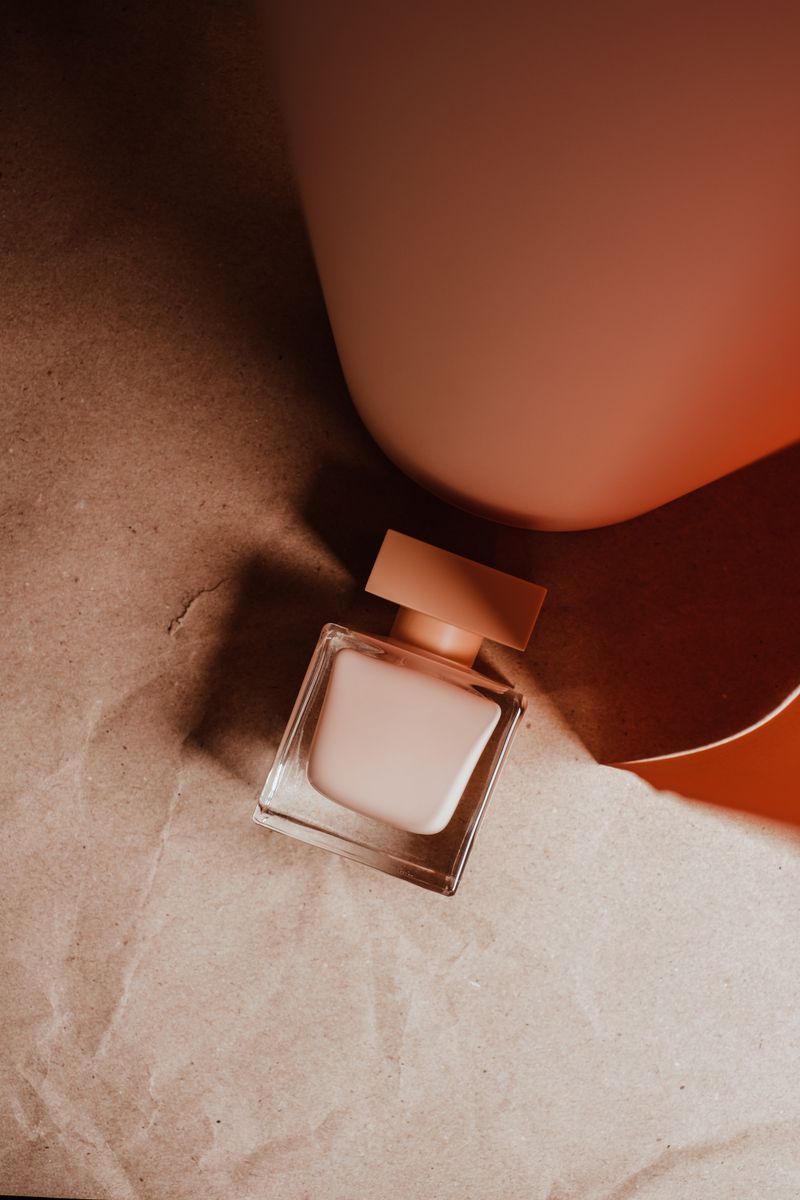
Neuro-Perfumery Is Designing Scent to Change Your Brain State. Here's the Science Behind Fragrance That Targets Calm, Focus, and Sleep.
🧠 Summary: Neuro-perfumery formulates fragrance using neuroscience — targeting calm, focus, or sleep through specific molecules like linalool and vetiver that interact directly with the brain's limbic system. The science on individual molecules is solid; the leap to branded "focus perfumes" is still more art than proof.

Why does smell reach your emotions before you can name what you're smelling?
Every other sense — sight, sound, touch, taste — passes through a relay station called the thalamus before reaching the emotional brain. Smell does not. Olfactory signals travel directly to the limbic system — the amygdala (emotion) and hippocampus (memory) — with only two synapses between your nose and the amygdala. No other sense has this shortcut.
This is why a scent can make you feel something — comfort, unease, a vivid childhood memory — before you consciously identify what you are smelling. It is also why perfumers have always known, intuitively, that fragrance is an emotional medium. Neuro-perfumery takes that intuition and adds data.
2 synapses
Between nose and amygdala — no other sense is this direct
< 150 ms
Time for an odor to trigger an emotional response
0 thalamus
Smell is the only sense that bypasses the brain's relay station
What molecules does neuro-perfumery actually use — and what does the research say?
The strongest evidence is not for branded "neuro-perfumes" as finished products — it is for individual aromatic molecules that have been studied in isolation. Here is what holds up:
Linalool — the calm molecule
Linalool is the primary aromatic compound in lavender. A landmark 2018 study published in Frontiers in Behavioral Neuroscience confirmed that vaporized linalool produced anxiolytic (anxiety-reducing) effects in mice — but only when they could smell it. Blocking the olfactory pathway eliminated the effect entirely, proving the calming response travels through the nose, not the lungs. Separate human research found lavender inhalation was associated with significant decreases in cortisol levels within 15 minutes. Linalool appears to promote GABA receptor activity — the same pathway targeted by established anti-anxiety medications.
Vetiver and hinoki — the grounding molecules
Vetiver oil contains vetiverol and khusimol — compounds associated with parasympathetic nervous system activation (the "rest and digest" state). Research has linked vetiver inhalation with slower respiratory rates and reduced self-reported anxiety. Hinoki (Japanese cypress), popular in Korean and Japanese bath culture, contains alpha-pinene — a terpene associated with decreased cortisol in forest-bathing studies. Neuro-perfumers use these as base notes: slow-release molecules that ground a fragrance's emotional arc.
Citrus terpenes — the alertness molecules
Limonene (found in bergamot, lemon, yuzu) and beta-pinene have been associated with increased alertness and elevated mood in aromatherapy research. One study found bergamot oil inhalation was linked to reduced salivary cortisol while participants reported feeling more energized — a rare combination of calm and alert. This is why many "focus" fragrance blends lead with citrus top notes.
Does a "focus perfume" actually make you focus — or is it more complicated?
Here is where honesty matters. The research on individual molecules (linalool, limonene, alpha-pinene) is genuinely encouraging — these compounds produce measurable physiological changes in controlled settings. But a finished perfume is not a controlled setting. It is a complex blend of dozens of molecules, worn on warm skin, in unpredictable environments, by a person with unique olfactory associations.
Nobody has published a clinical trial showing that wearing Perfume X for 8 hours produces a statistically significant increase in focus compared to wearing Perfume Y. The gap between "linalool reduces cortisol in a lab" and "this $120 bottle makes you calmer" is real. But the gap is not a chasm — it is a bridge being built.
What we can say confidently: if you find that certain scents make you feel calmer or more alert, that is not placebo — there is a neurological mechanism behind it. Neuro-perfumery is trying to make that mechanism intentional rather than accidental.
How are Korean fragrance brands approaching neuro-perfumery?
Korea's fragrance exports hit $386 million in 2024 — up nearly 40% year-on-year — making fragrance the fastest-growing segment within K-beauty. And while European houses approach neuro-perfumery through clinical branding, Korean brands are doing something more subtle: designing fragrances around emotional states without naming them as "neuro" products.
How to build your own neuro-fragrance routine
You do not need a branded "neuro-perfume" to use scent intentionally. The research points to simple principles:
Morning — citrus forward
Bergamot, yuzu, or lemon top notes. Limonene is associated with increased alertness and elevated mood. Pair with a light woody base to avoid the scent disappearing in an hour.
Afternoon focus — herbal-woody
Rosemary, peppermint, or eucalyptus — terpenes like 1,8-cineole have been linked to cognitive performance in small studies. Layer over a vetiver or cedar base for sustained grounding.
Evening wind-down — lavender and woods
Linalool-rich lavender, sandalwood, or hinoki. The parasympathetic activation is the most well-documented effect in neuro-fragrance research. Apply to pulse points 30 minutes before sleep as a scent ritual.
The most important thing: consistency builds association. If you always wear the same scent when you sit down to work, your brain will learn to associate that scent with focus — regardless of its molecular profile. Neuro-perfumery gives you a head start, but habit does the heavy lifting.
This article is for informational purposes only. Not intended as medical or professional advice.