Decode
The Antioxidant That Outperforms Vitamin C — and Why It Shows Up in Both Your Serum and Supplement
By J. Yoo
Astaxanthin is a carotenoid from microalgae that gives salmon its pink hue — and clinical trials now show it may reduce UV-related skin damage from the inside out. Here is the science behind why Korean labs are calling it the most sophisticated antioxidant in the skin toolkit.
July 13, 2026 · 7 min read
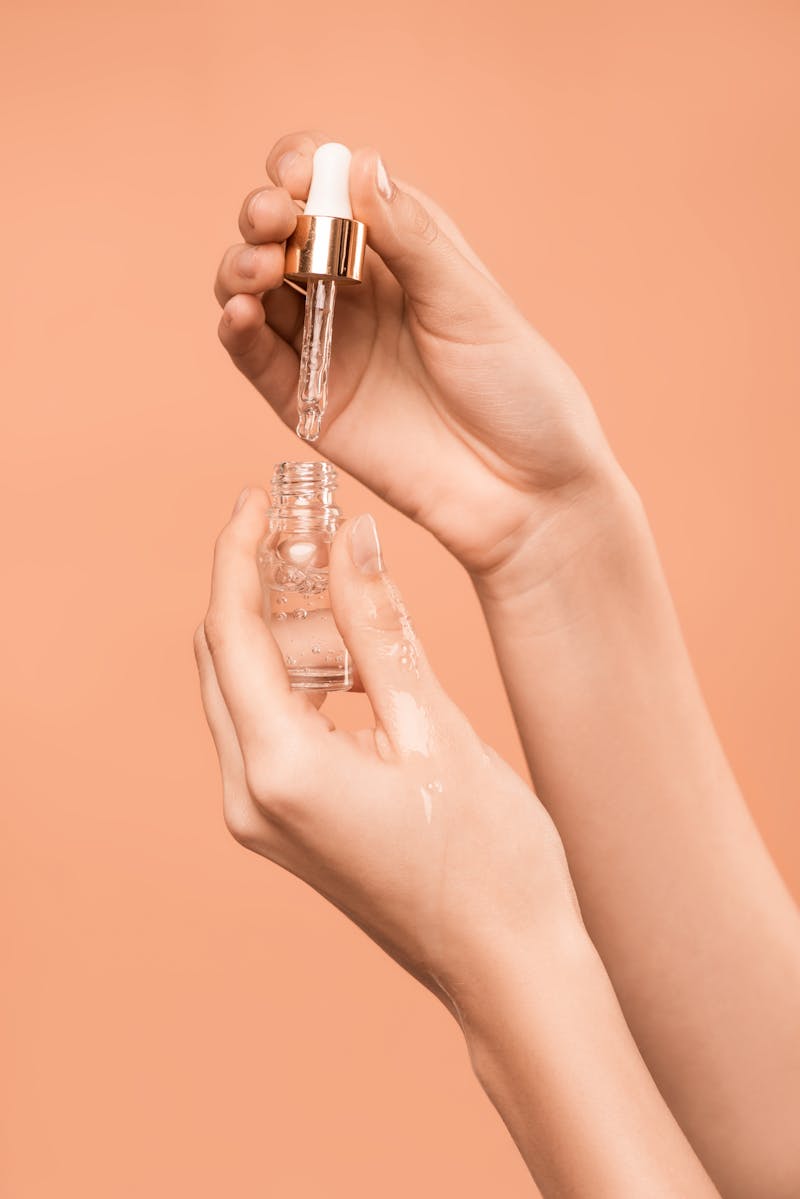
What is astaxanthin, and why is it pink?
Astaxanthin (as-tuh-ZAN-thin) is a xanthophyll carotenoid — a pigment molecule naturally produced by the microalgae Haematococcus pluvialis. When conditions turn harsh — intense UV, nutrient depletion — the algae synthesizes astaxanthin as a molecular shield against oxidative damage. Salmon, shrimp, and flamingos owe their pink-red color entirely to eating this algae; they cannot produce astaxanthin themselves. The pigment accumulates in their tissue and stays there, which is why wild salmon flesh is a much deeper pink than farmed salmon fed synthetic alternatives.
- Up to 6,000×
- Greater antioxidant activity than vitamin C per ORAC comparisons
- 4–6 mg/day
- Dose used in clinical trials showing UV protection and skin benefits
- 8–10 weeks
- Timeframe before measurable skin improvements appear in trials
Why does astaxanthin outperform vitamin C as an antioxidant?
The comparison comes down to molecular architecture. Vitamin C is water-soluble — it operates in the watery interior of cells. Vitamin E is fat-soluble — it works inside the fatty cell membrane. Astaxanthin is structurally both. Its molecule is long enough to span the entire cell membrane, with one end anchored in the water-based cytoplasm and the other embedded in the lipid bilayer. That means it can neutralize free radicals on both sides of the membrane at once — something neither vitamin C nor E can do alone. This is why researchers describe astaxanthin as a membrane-embedded antioxidant, and why Korean dermatology labs have been building it into photoprotection and longevity research for several years.
What do clinical trials actually show for skin?
The evidence base has strengthened meaningfully. A 2025 double-blind, placebo-controlled study with Japanese participants found that 4 mg of astaxanthin daily for nine weeks increased their minimal erythema dose (MED) — the threshold of UV exposure before redness occurs — and reduced moisture loss in UV-irradiated skin areas. A 2026 clinical study using 6 mg/day over eight weeks found a significant increase in MED compared to placebo. Earlier work confirmed that continuous supplementation reduced visible oxidative stress markers in middle-aged adults: texture, elasticity, and fine-line depth all showed measurable change. No trial has suggested astaxanthin replaces sunscreen — but the data consistently points to meaningful internal photoprotection support.
- UV protection support
- Multiple trials show astaxanthin raises the MED threshold. It does not block UV like SPF, but may reduce cumulative UV-related damage at the cellular level.
- Elasticity and texture
- Longer-term supplementation (8–12 weeks) is associated with improvements in skin texture and elasticity in middle-aged adults, linked to reduced oxidative degradation of structural proteins.
- Moisture retention
- UV-exposed areas showed reduced transepidermal water loss (TEWL) in astaxanthin groups — the skin barrier held hydration better even under UV stress.
Oral supplement or topical serum — or both?
This is where the nuance matters. Topical astaxanthin faces a real formulation challenge: the molecule is large, deeply lipophilic, and intensely orange — which creates tinting risk and limits penetration through the epidermis in standard serum bases. Korean formulators have made progress using microencapsulation and oil-rich carriers, and several brands now include it in meaningful concentrations. But the clinical data for UV protection and internal skin density comes almost entirely from oral supplementation. The two routes are not competing — they target different depths. Topical works at the skin surface. Oral astaxanthin, once absorbed, distributes to the dermis within 24–48 hours — reaching the layer where structural integrity actually lives.
For informational purposes only. Not intended as medical or professional advice.
Which products are worth trying?
- VT Cosmetics Mild Reedle Shot 50 — One of the top-rated Korean serums with astaxanthin — pairs it with spicule technology for surface texture refinement.
- Dear, Klairs Vitamin PDRN Bouncy Pore Serum — Combines astaxanthin with PDRN — covering antioxidant protection and skin-density support in a single affordable formula.
- Eqqualberry Bakuchiol Plumping Serum — Currently the most popular Korean serum with astaxanthin — layers it with bakuchiol for a retinol-alternative routine.
비타민 C보다 강한 항산화 성분이 있어요. 세럼과 영양제에 동시에 등장한 이유
아스타잔틴은 연어를 분홍색으로 만드는 미세조류 유래 카로티노이드예요. 임상시험에서 자외선으로 인한 피부 손상을 내부에서 줄일 수 있다는 결과가 나오면서, 한국 연구실이 피부 항산화 성분 중 가장 정교한 물질로 주목하고 있어요.
아스타잔틴이 뭐고, 왜 분홍색인가요?
아스타잔틴은 크산토필 카로티노이드의 일종으로, 미세조류인 Haematococcus pluvialis가 자연적으로 만들어내는 색소 분자예요. 강한 자외선이나 영양 부족 같은 극한 환경에 처하면 이 조류는 산화 손상에 맞서는 분자 방어막으로 아스타잔틴을 합성합니다. 연어, 새우, 플라밍고의 분홍빛은 이 조류를 먹으면서 얻은 색소 덕분이에요. 이 동물들은 직접 아스타잔틴을 만들지 못해요. 색소는 조직에 축적돼 유지되는데, 그래서 자연산 연어의 살빛이 합성 사료를 먹은 양식 연어보다 훨씬 짙은 거예요.
- 최대 6,000배
- ORAC 비교 기준 비타민 C 대비 항산화 활성
- 하루 4–6mg
- 자외선 차단·피부 개선 효과를 입증한 임상시험의 기준 용량
- 8–10주
- 시험에서 측정 가능한 피부 개선이 나타나기까지 걸리는 기간
아스타잔틴이 비타민 C보다 항산화 효과가 뛰어난 이유는요?
차이는 분자 구조에 있어요. 비타민 C는 수용성이라 세포 내부의 수성 환경에서 작동하고, 비타민 E는 지용성이라 지질 세포막 안에서만 기능해요. 아스타잔틴은 구조적으로 둘 다예요. 분자 길이가 세포막 전체를 가로지를 만큼 길어, 한쪽 끝은 수성 세포질에, 다른 끝은 지질 이중층에 고정돼 있어요. 그 덕분에 세포막 양쪽에서 동시에 자유 라디칼을 중화할 수 있습니다. 비타민 C와 E 둘 다 혼자서는 불가능한 기능이에요. 연구자들이 아스타잔틴을 '막 내재형 항산화제'로 부르는 이유이고, 한국 피부과 연구실이 몇 년 전부터 광보호·노화 연구에 편입시켜온 이유이기도 해요.
임상시험에서 피부에 실제로 어떤 효과가 확인됐나요?
근거가 눈에 띄게 탄탄해지고 있어요. 2025년 일본 이중맹검 위약 대조 연구에서는 하루 4mg의 아스타잔틴을 9주간 복용한 참가자들의 최소 홍반량(MED)이 높아졌고, 자외선 조사 부위의 수분 손실도 줄었어요. 2026년 임상연구에서도 6mg/일 8주 복용 그룹이 위약 그룹보다 MED가 유의미하게 높게 나타났어요. 이전 연구에서는 지속적 보충이 중년층의 산화 스트레스 관련 가시적 지표를 개선했다는 결과도 확인됐어요. 피부결, 탄력, 잔주름 깊이 모두에서 변화가 측정됐습니다. 아스타잔틴이 자외선 차단제를 대체할 수 있다는 연구는 없지만, 데이터는 일관되게 내부에서 의미 있는 광보호 보조 기능을 가리키고 있어요.
- 자외선 차단 보조
- 여러 시험에서 아스타잔틴이 MED 임계값을 높인다는 결과가 나왔어요. SPF처럼 자외선을 차단하는 건 아니지만, 세포 수준의 누적 UV 손상을 줄이는 데 도움이 될 수 있어요.
- 탄력과 피부결
- 8~12주 이상 보충 시 중년층의 피부결과 탄력 개선과 연관성이 관찰됐어요. 피부 구조 단백질의 산화적 분해가 줄어드는 것과 관련 있는 것으로 보여요.
- 수분 유지
- 아스타잔틴 복용 그룹의 자외선 노출 부위에서 경피 수분 손실(TEWL)이 줄었어요. 자외선 스트레스 상황에서도 피부 장벽이 수분을 더 잘 지켰다는 의미예요.
영양제로 먹을까요, 세럼으로 바를까요, 아니면 둘 다?
이 지점에서 미묘한 차이가 중요해요. 외용 아스타잔틴은 제형화에 실질적인 한계가 있어요. 분자가 크고 강한 지용성을 지닌 데다 진한 주황색이라, 피부 착색 위험이 있고 일반 세럼 기제로는 표피 침투가 쉽지 않아요. 한국 포뮬레이터들이 마이크로캡슐화와 오일 기반 담체를 활용해 많은 발전을 이뤄냈고, 여러 브랜드가 이제 의미 있는 농도로 담아내고 있습니다. 다만 자외선 차단과 피부 내부 밀도 개선에 관한 임상 데이터는 거의 대부분 경구 보충에서 나온 거예요. 두 방법은 경쟁 관계가 아니라 작용 깊이가 달라요. 외용은 피부 표면에 작용하고, 경구 아스타잔틴은 흡수 후 24~48시간 안에 진피층까지 분포합니다. 피부 구조적 완결성이 실제로 자리 잡는 층이죠.
본 콘텐츠는 정보를 제공하기 위한 것이며, 전문적인 의료 조언을 대신하지 않습니다.
어떤 제품을 써볼 만할까요?
- VT Cosmetics Mild Reedle Shot 50 — 아스타잔틴 함유 한국 세럼 중 최고 평점. 스피큘 기술과 조합해 피부결 개선에 초점을 맞췄어요.
- Dear, Klairs Vitamin PDRN Bouncy Pore Serum — 아스타잔틴과 PDRN을 함께 담아 항산화 보호와 피부 밀도 개선을 하나의 합리적인 포뮬러로 커버해요.
- Eqqualberry Bakuchiol Plumping Serum — 현재 가장 인기 있는 아스타잔틴 함유 한국 세럼. 바쿠치올과 레이어링해 레티놀 대안 루틴으로 활용하기 좋아요.