Decode
Why Does Your Skincare Pill? The Molecular Reason Behind Those Annoying Flakes
You've layered your serum, moisturizer, and sunscreen — and now tiny balls of product are rolling off your face. It's called pilling, and the cause isn't your skin. It's a chemistry problem between your products.
June 4, 2026 · 6 min read
What is skincare pilling, and why does it happen?
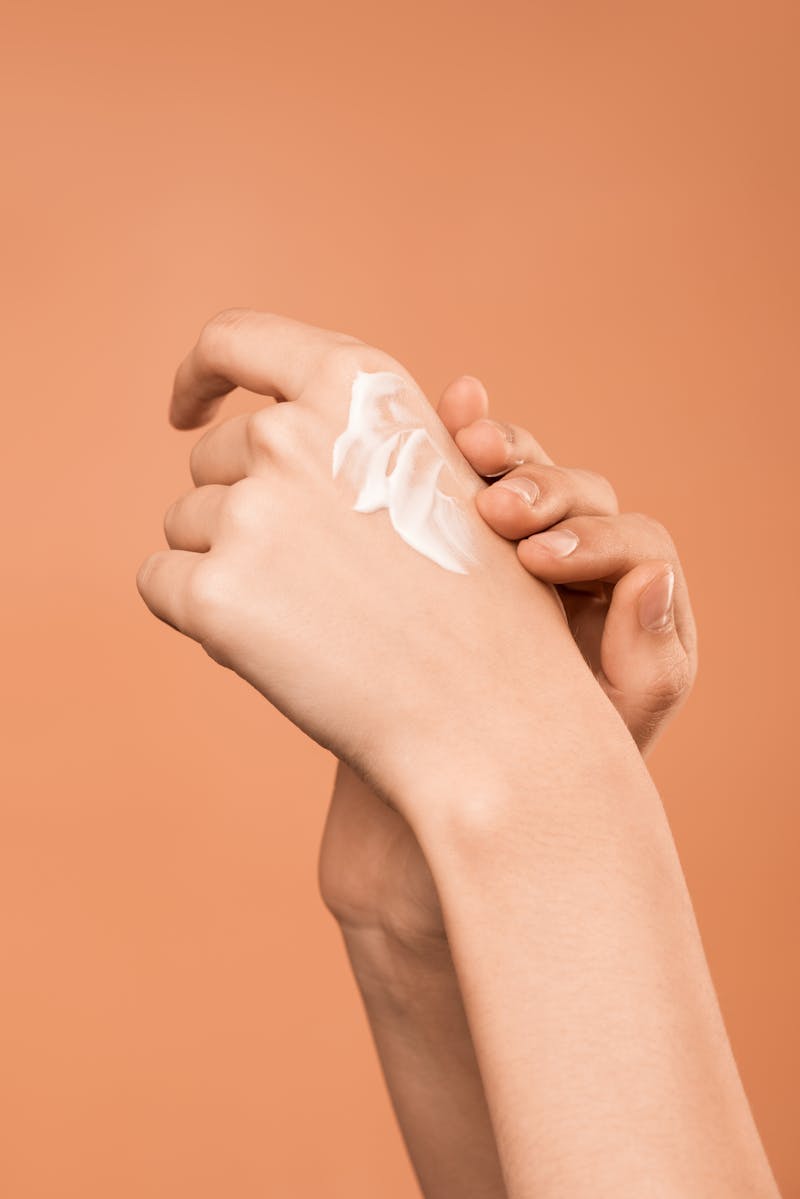
Pilling is when your skincare or sunscreen forms tiny balls, flakes, or rolls on your skin after application. It looks like you're peeling, but you're not — your products are literally rejecting each other on your face.
The mechanism is surprisingly simple. Most skincare products contain polymers — long-chain molecules that form thin films on skin. When you layer one polymer film on top of another, and the two are chemically incompatible (one water-based, one silicone-based), they can't interlock. Friction from touching your face disrupts the unstable bilayer, and the top film rolls off in tiny balls.
- 3 main triggers
- Silicone + water clash, excess product, and rubbing before absorption
- 60 seconds
- Minimum wait time between layers to prevent most pilling
Which ingredients cause pilling the most?
The problem isn't any single ingredient — it's the combination. A silicone-based sunscreen over a water-based serum is the single most common pilling combination in multi-step routines. The water-based layer sits underneath, attracts moisture, and creates micro-tension zones where the silicone film above delamitates and rolls.
How do you stop skincare from pilling?
- 1. Match your bases
- Water-based serum → water-based moisturizer → water-based sunscreen. OR silicone serum → silicone moisturizer → silicone sunscreen. Don't cross the streams. Check ingredients lists: if dimethicone/cyclopentasiloxane is in the top 5, it's silicone-based.
- 2. Wait 60 seconds between layers
- This is the single most effective fix. Each product needs time to form its film and partially absorb before the next goes on. Patting (not rubbing) speeds this up.
- 3. Use less product
- A pea-sized amount of serum is enough for your whole face. More product = more film = more to pill. Excess product can't absorb and sits on the surface waiting to ball up.
- 4. Pat, don't rub
- Rubbing creates friction that shears polymer films before they've set. Press products into skin with your palms instead. This is why Korean skincare emphasizes patting — it's not just tradition, it's physics.
Quick test: If you're not sure whether two products are compatible, apply one to the back of your hand, wait 30 seconds, then apply the second and rub gently. If it pills on your hand, it'll pill on your face.
Does the order serum → moisturizer → sunscreen actually matter?
Yes, and here's why. The standard layering rule — thinnest to thickest — exists because thin, water-heavy formulas absorb faster and create a hydrated base for heavier products to sit on. When you reverse it (cream first, then watery serum), the serum has nowhere to go and pools on top of the cream's occlusive layer.
Sunscreen is especially sensitive to this. Chemical sunscreens need to form an even film to work properly. Physical (mineral) sunscreens with zinc oxide or titanium dioxide are even more prone to pilling because the metal oxide particles create a heavier, more rigid film. If you're getting pilling specifically from sunscreen, try applying it as your last skincare step (after everything has fully absorbed) and avoid touching your face for 2–3 minutes.
Products that play well with others
- Beauty of Joseon Relief Sun: Rice + Probiotics SPF50+ PA++++ — Water-based formula with no heavy silicones — layers cleanly over water-based serums without pilling.
- COSRX Advanced Snail 96 Mucin Power Essence — Lightweight, water-based essence that absorbs quickly — rarely conflicts with any product layered on top.
- Isntree Hyaluronic Acid Watery Sun Gel SPF50+ PA++++ — Gel-type sunscreen with a water-light finish — sets quickly and resists pilling even under makeup.
For informational purposes only. Not intended as medical or professional advice.
스킨케어가 왜 뭉쳐서 떨어질까? 필링 현상의 분자적 원인
세럼, 보습제, 선크림을 차례로 바르고 나니 작은 알갱이가 후두둑 떨어져요. 이걸 '필링 현상'이라고 하는데, 피부 탓이 아니에요. 제품 사이의 화학 문제예요.
스킨케어 필링이 뭐고, 왜 생기는 걸까?
필링은 스킨케어나 선크림을 바른 뒤 피부 위에서 작은 알갱이, 각질 같은 조각, 또는 밀림이 생기는 현상이에요. 피부가 벗겨지는 것처럼 보이지만 실은 그게 아니에요 — 제품들이 말 그대로 얼굴 위에서 서로를 밀어내는 거예요.
메커니즘은 의외로 단순해요. 대부분의 스킨케어 제품에는 폴리머 — 피부 위에 얇은 막을 형성하는 긴 사슬 분자 — 가 들어있어요. 한 폴리머 필름 위에 화학적으로 호환되지 않는 다른 폴리머 필름(하나는 수성, 다른 하나는 실리콘 기반)을 바르면, 두 층이 맞물리지 못해요. 얼굴을 만지는 마찰이 불안정한 이중층을 흐트러뜨리고, 위쪽 필름이 작은 알갱이로 밀려나는 거예요.
- 3가지 주요 원인
- 실리콘 + 수성 충돌, 과량 도포, 흡수 전 문지르기
- 60초
- 대부분의 필링을 예방하는 레이어 사이 최소 대기 시간
어떤 성분이 필링을 가장 많이 유발할까?
문제는 단일 성분이 아니라 조합이에요. 수성 세럼 위에 실리콘 기반 선크림을 바르는 것이 다단계 루틴에서 가장 흔한 필링 조합이에요. 아래의 수성 층이 수분을 끌어당기면서 위의 실리콘 필름이 떨어져 나오는 미세 긴장 지대가 만들어져요.
스킨케어 필링을 어떻게 막을 수 있을까?
- 1. 베이스를 맞추세요
- 수성 세럼 → 수성 보습제 → 수성 선크림. 또는 실리콘 세럼 → 실리콘 보습제 → 실리콘 선크림. 베이스를 섞지 마세요. 성분 목록을 확인하세요: 디메치콘/사이클로펜타실록세인이 상위 5개 안에 있으면 실리콘 기반이에요.
- 2. 레이어 사이에 60초 대기
- 이게 가장 효과적인 해결법이에요. 각 제품이 필름을 형성하고 부분적으로 흡수될 시간이 필요해요. 문지르지 말고 두드려서 바르면 이 과정이 빨라져요.
- 3. 양을 줄이세요
- 세럼은 완두콩 크기면 얼굴 전체에 충분해요. 제품이 많을수록 = 필름이 많을수록 = 필링이 많아져요. 과량은 흡수되지 못하고 표면에 남아서 뭉칠 준비를 해요.
- 4. 문지르지 말고 두드리세요
- 문지르면 폴리머 필름이 고정되기 전에 마찰로 끊겨요. 대신 손바닥으로 피부에 눌러 주세요. 한국 스킨케어가 두드려 바르기를 강조하는 이유 — 전통이 아니라 물리학이에요.
간단한 테스트: 두 제품이 호환되는지 확실하지 않으면, 손등에 하나를 바르고 30초 기다린 뒤 두 번째를 바르고 살살 문질러 보세요. 손등에서 밀리면 얼굴에서도 밀려요.
세럼 → 보습제 → 선크림 순서가 정말 중요할까?
네, 이유가 있어요. '묽은 것에서 진한 것 순'이라는 표준 레이어링 규칙은, 얇고 수분이 많은 제형이 빨리 흡수되어 더 무거운 제품이 안착할 수 있는 수분 기반을 만들어주기 때문이에요. 순서를 뒤집으면 (크림 먼저, 그다음 수성 세럼) 세럼이 갈 곳이 없어서 크림의 밀폐 층 위에 고여요.
특히 선크림이 예민해요. 화학 선크림은 고르게 필름을 형성해야 제대로 작동해요. 산화아연이나 이산화티타늄이 든 물리적(미네랄) 선크림은 금속 산화물 입자가 더 무겁고 단단한 필름을 만들기 때문에 필링이 더 잘 생겨요. 선크림에서 특히 필링이 생긴다면, 모든 스킨케어가 완전히 흡수된 후 마지막 단계로 바르고 2~3분 동안 얼굴을 만지지 마세요.
다른 제품과 잘 어울리는 제품들
- Beauty of Joseon Relief Sun: Rice + Probiotics SPF50+ PA++++ — 무거운 실리콘 없는 수성 포뮬러 — 수성 세럼 위에 밀림 없이 깔끔하게 레이어링.
- COSRX Advanced Snail 96 Mucin Power Essence — 빠르게 흡수되는 가벼운 수성 에센스 — 위에 어떤 제품을 올려도 거의 충돌하지 않아요.
- Isntree Hyaluronic Acid Watery Sun Gel SPF50+ PA++++ — 수분감 있는 젤 타입 선크림 — 빠르게 세팅되고 메이크업 아래에서도 밀림에 강해요.
본 콘텐츠는 정보를 제공하기 위한 것이며, 전문적인 의료 조언을 대신하지 않습니다.