Decode
Lip Peptides Are TikTok's Newest Obsession. Do They Actually Build Collagen in Your Lips?
By J. Yoo
Your lips have 3-5 cell layers, no oil glands, and lose water 3x faster than your cheeks. Peptide lip treatments claim to rebuild collagen from within — but lip skin plays by different rules than the rest of your face.
May 19, 2026 · 7 min read
Why Do Lips Age Faster Than the Rest of Your Face?
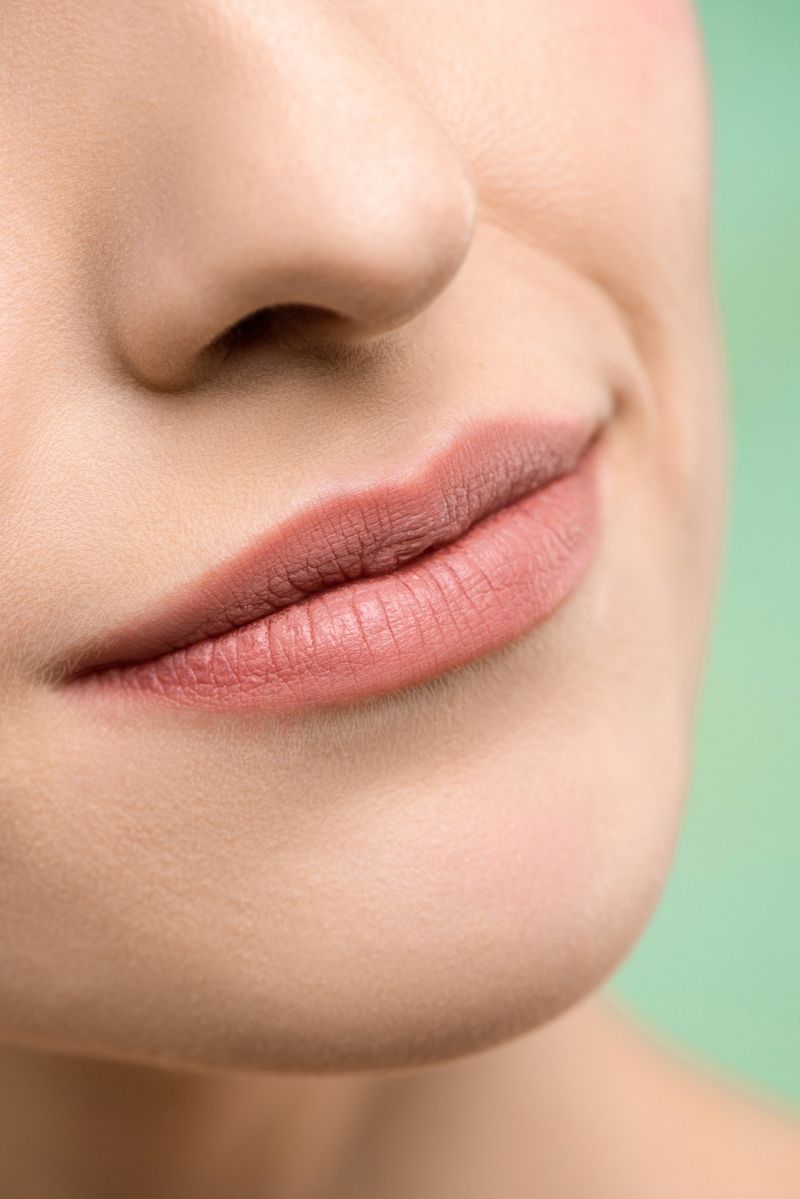
Your lip vermilion (the colored part) is structurally unlike any other skin on your body. A 2025 study in the Journal of Cosmetic Dermatology mapped the differences: lip skin has only 3-5 cell layers versus ~16 on your cheeks, virtually no melanin for UV protection (a keratinocyte-to-melanocyte ratio of 10-15:1 versus 4:1 on facial skin), and zero sebaceous glands. That last point matters most — no oil glands means no natural moisture barrier.
- 3x Higher Water Loss
- Lip transepidermal water loss (TEWL) is almost three times higher than cheek skin — lips are in a permanent state of dehydration compared to the rest of your face
- First Wrinkles at 32-33
- Lip wrinkles first appear at 32-33 years of age and become clinically apparent by 45. Women show severe wrinkle classification at 33.3% versus only 6.6% in men
- Zero Oil Glands
- Unlike facial skin, lip vermilion has no sebaceous glands, no sweat glands, and no hair follicles — making it entirely dependent on external products for barrier support
How Do Peptide Lip Treatments Claim to Work?
Peptides are short chains of amino acids that act as signaling molecules. When applied topically, they're designed to tell fibroblasts (the cells that make collagen) to ramp up production. In facial skincare, this is well-established science. The question is whether it works the same way in lip skin — a tissue with fundamentally different architecture.
There's a third, underappreciated mechanism: barrier repair. Peptides strengthen the lip's nonexistent natural barrier, reducing that 3x TEWL rate. Less water loss means lips stay hydrated longer between applications. Over weeks, this alone makes lips look fuller and smoother — not because new collagen appeared, but because water stopped leaving.
Do Lip Peptides Actually Plump Lips — or Is It Just Hydration?
Both — and that's not a cop-out. The hydration effect is immediate and measurable. The collagen effect is slower and subtler. Here's the honest breakdown:
- What Happens in Days
- Barrier improvement + HA-driven water retention = visibly smoother, plumper lips. This is real but reversible — stop using the product and it fades within a week as TEWL returns to baseline.
- What Happens in Weeks (4-8)
- Peptide-driven collagen signaling may produce modest increases in dermal density. Users report more defined lip borders and smoother texture. These changes are subtle and cumulative — not dramatic volume.
- What They Can't Do
- Replace filler. Lip peptides work at the cellular signaling level — they won't add the 0.5-1.0 mL of hyaluronic acid gel that injectable fillers deposit directly into the submucosa. Different tools for different goals.
- The Honest Edge Case
- Most clinical evidence for topical peptides comes from facial skin studies, not lip-specific trials. The lip's thinner structure may help penetration, but it also means less dermal tissue for collagen to accumulate in. The science is plausible but the lip-specific data is still early.
What Should You Look for in a Peptide Lip Treatment?
Not all peptide lip products are created equal. The format matters as much as the peptide. Since lips have no barrier, the vehicle that delivers the peptide — and seals it in — determines whether you're getting real results or expensive lip gloss.
Which Peptide Lip Products Are Worth Trying?
- Rhode Peptide Lip Boost — The product that started the TikTok lip peptide wave. Thick serum-like texture with peptides + hyaluronic acid — plumps without tingling or irritation. The benchmark.
- Laneige Bouncy & Firm Lip Treatment — K-beauty's answer to lip peptides — ceramide capsules + hyaluronic acid + plumping peptides in a 4-in-1 balm format. Hydrates, firms, nourishes, and smooths.
- Paula's Choice Pro-Collagen Peptide Plumping Gloss Balm — Combines peptides with a ceramide-squalane occlusive layer — addresses the lip barrier problem that most peptide glosses ignore. Gloss finish with treatment function.
- Mediheal Labocare Pantenolips Heal Balm — A panthenol-heavy K-beauty lip balm that takes the barrier-first approach. Not a peptide product per se, but addresses the root problem — sealing the lip barrier so any peptide treatment you layer underneath actually stays put.
- The Inkey List Tripeptide Plumping Lip Balm — The budget entry — tripeptide complex for plumping at a fraction of Rhode's price. Proves you don't need to spend $30 for the peptide signaling mechanism.
For informational purposes only. Not intended as medical or professional advice.
립 펩타이드, 틱톡의 최신 집착. 입술에 정말 콜라겐이 생길까요?
입술은 세포층이 3-5겹뿐이고, 피지선도 없고, 볼보다 수분을 3배 빨리 잃어요. 펩타이드 립 트리트먼트가 안에서부터 콜라겐을 재건한다고 하는데 — 입술 피부는 얼굴과 다른 규칙으로 작동해요.
입술은 왜 얼굴보다 빨리 노화될까요?
입술 적색부(색이 있는 부분)는 몸의 다른 어떤 피부와도 구조적으로 달라요. 2025년 Journal of Cosmetic Dermatology 연구가 차이를 밝혔어요: 입술 피부는 세포층이 3-5겹인데 볼은 약 16겹이에요. 자외선 보호를 위한 멜라닌은 거의 없고(각질세포 대 멜라닌세포 비율이 10-15:1, 얼굴 피부는 4:1), 피지선은 아예 없어요. 마지막이 가장 중요해요 — 피지선이 없다는 건 자연적인 수분 장벽이 없다는 뜻이에요.
- 수분 손실 3배
- 입술의 경피수분손실(TEWL)은 볼 피부보다 거의 3배 높아요 — 입술은 얼굴의 나머지 부분에 비해 항상 탈수 상태에 있어요
- 첫 주름은 32-33세에
- 입술 주름은 32-33세에 처음 나타나고 45세에 임상적으로 뚜렷해져요. 여성의 심한 주름 비율은 33.3%로 남성(6.6%)보다 훨씬 높아요
- 피지선 0개
- 얼굴 피부와 달리 입술 적색부에는 피지선, 땀샘, 모낭이 전혀 없어요 — 장벽 지원을 위해 외부 제품에 전적으로 의존해요
펩타이드 립 트리트먼트는 어떤 원리로 효과가 있다고 할까요?
펩타이드는 신호 분자 역할을 하는 짧은 아미노산 사슬이에요. 외용으로 바르면 섬유아세포(콜라겐을 만드는 세포)에 생산을 늘리라고 신호를 보내도록 설계돼 있어요. 얼굴 스킨케어에서 이건 확립된 과학이에요. 문제는 근본적으로 다른 구조를 가진 입술 피부에서도 같은 방식으로 작동하느냐예요.
세 번째, 과소평가된 기전이 있어요: 장벽 복구. 펩타이드가 입술의 사실상 없는 자연 장벽을 강화해서 3배 높은 경피수분손실 속도를 줄여요. 수분 손실이 줄면 바르는 사이사이에 입술이 더 오래 촉촉하게 유지돼요. 몇 주에 걸쳐 이것만으로도 입술이 더 통통하고 매끄럽게 보여요 — 새 콜라겐이 생겨서가 아니라 수분이 빠져나가는 걸 멈췄기 때문이에요.
립 펩타이드가 실제로 입술을 플럼핑할까요 — 아니면 그냥 보습일까요?
둘 다예요 — 그리고 이건 애매한 답이 아니에요. 보습 효과는 즉각적이고 측정 가능해요. 콜라겐 효과는 더 느리고 미묘해요. 솔직한 정리는 이래요:
- 며칠 안에 일어나는 것
- 장벽 개선 + HA 기반 수분 보유 = 눈에 띄게 매끄럽고 통통한 입술. 실재하지만 가역적이에요 — 제품 사용을 중단하면 TEWL이 기준치로 돌아가면서 일주일 내에 사라져요.
- 몇 주(4-8주) 후 일어나는 것
- 펩타이드 기반 콜라겐 신호가 진피 밀도를 소폭 증가시킬 수 있어요. 사용자들은 더 뚜렷한 입술 윤곽과 매끈한 텍스처를 보고해요. 이 변화는 미묘하고 누적적이에요 — 극적인 볼륨이 아니에요.
- 할 수 없는 것
- 필러를 대체하는 건 불가능해요. 립 펩타이드는 세포 신호 수준에서 작동해요 — 주사형 필러가 점막하 조직에 직접 주입하는 0.5-1.0 mL의 히알루론산 젤을 추가할 수는 없어요. 목표가 다른 다른 도구예요.
- 솔직한 경계 사례
- 외용 펩타이드에 대한 대부분의 임상 증거는 얼굴 피부 연구에서 왔지, 입술 특화 시험이 아니에요. 입술의 더 얇은 구조가 침투에 도움이 될 수 있지만, 콜라겐이 축적될 진피 조직도 적다는 뜻이에요. 과학적으로 타당하지만 입술 특화 데이터는 아직 초기 단계예요.
펩타이드 립 트리트먼트를 고를 때 뭘 봐야 할까요?
모든 펩타이드 립 제품이 같은 건 아니에요. 포맷이 펩타이드만큼 중요해요. 입술에는 장벽이 없으니까, 펩타이드를 전달하고 밀봉하는 제형이 진짜 효과를 얻느냐 비싼 립글로스를 사느냐를 결정해요.
써볼 만한 펩타이드 립 제품은 뭘까요?
- Rhode Peptide Lip Boost — 틱톡 립 펩타이드 열풍을 시작한 제품. 펩타이드 + 히알루론산의 두꺼운 세럼 텍스처 — 따끔거림이나 자극 없이 플럼핑. 기준점이에요.
- Laneige Bouncy & Firm Lip Treatment — K-뷰티의 립 펩타이드 답변 — 세라마이드 캡슐 + 히알루론산 + 플럼핑 펩타이드가 4-in-1 밤 포맷으로. 보습, 탄력, 영양, 매끄러움을 동시에.
- Paula's Choice Pro-Collagen Peptide Plumping Gloss Balm — 펩타이드와 세라마이드-스쿠알란 밀폐층을 결합 — 대부분의 펩타이드 글로스가 무시하는 입술 장벽 문제를 해결해요. 트리트먼트 기능이 있는 글로스 마감.
- Mediheal Labocare Pantenolips Heal Balm — 장벽 우선 접근법의 판테놀 중심 K-뷰티 립밤. 엄밀히 펩타이드 제품은 아니지만 근본 문제를 해결해요 — 입술 장벽을 밀봉해서 아래에 바른 펩타이드 트리트먼트가 실제로 제자리에 남아있게 해요.
- The Inkey List Tripeptide Plumping Lip Balm — 가성비 선택지 — Rhode 가격의 일부로 플럼핑을 위한 트리펩타이드 복합체. 펩타이드 신호 기전에 30달러를 쓸 필요 없다는 걸 증명해요.
본 콘텐츠는 정보를 제공하기 위한 것이며, 전문적인 의료 조언을 대신하지 않습니다.