Decode
Skincare Ingredients Have an Expiration Problem Nobody Talks About.
That vitamin C serum you opened three months ago? It's probably working at half strength. Retinol loses up to 80% potency in six months. Here's what's actually happening inside your bottles — and how to tell.
May 26, 2026 · 7 min read
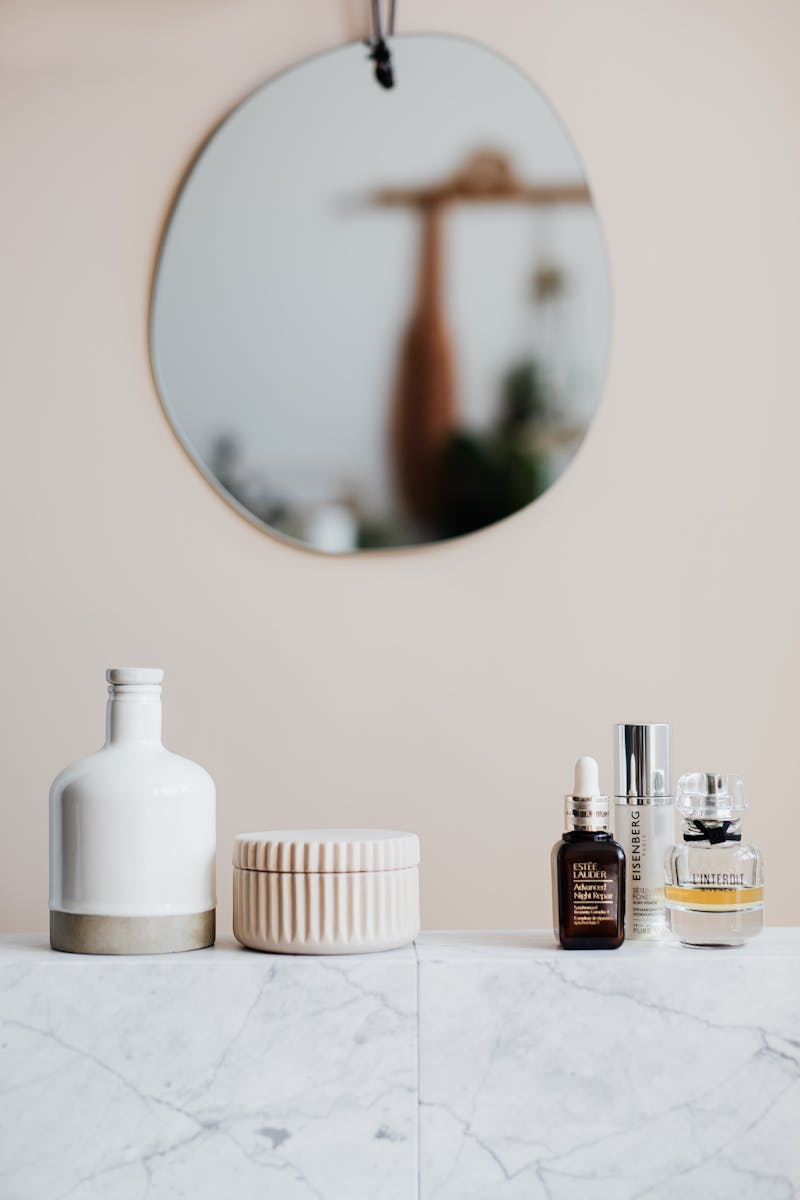
Why Do Skincare Ingredients Degrade After Opening?
Three enemies attack your skincare from the moment you open the cap: oxygen, light, and heat. Every time you open a bottle, fresh air enters. Every time you leave it on a sunlit shelf, UV photons break molecular bonds. Every summer day your bathroom climbs above 25°C, chemical reactions accelerate. The result: the active ingredient you paid for slowly converts into something that does nothing — or worse, something that irritates.
This isn't a defect — it's chemistry. The very properties that make these ingredients active (reactive molecular structures, electron-donating capacity, pH sensitivity) are what make them unstable. Stability and potency are fundamentally at odds.
Which Ingredients Degrade Fastest — and How Can You Tell?
- Vitamin C (L-Ascorbic Acid)
- The most unstable common active. Oxidizes within weeks of opening, turning from clear/pale to yellow, then amber, then brown. If your serum has darkened past light yellow, it's lost a significant portion of its antioxidant activity. Best-by: ~2 months after opening.
- Retinol / Retinal
- Degrades up to 80% after six months at room temperature. Light exposure accelerates this dramatically. Signs: color darkening from pale yellow to deep amber, reduced effectiveness, increased irritation from degradation byproducts. Best-by: 6-12 months after opening.
- Niacinamide
- The exception — remarkably stable. Resists oxidation and maintains effectiveness for up to 2 years even after opening. This is why niacinamide is in everything: it works and it lasts.
- AHAs & BHAs
- Moderately stable. Glycolic and salicylic acid hold up well for 12+ months if stored properly. pH is more important than oxidation here — if the product's pH drifts upward, the acid becomes less effective even if the molecule is intact.
What Does the PAO Symbol Mean — and Why Does It Matter More Than the Expiration Date?
The printed expiration date on your product tells you when the sealed, unopened product expires. But the moment you open it, a different clock starts. That's what the PAO symbol (Period After Opening) tracks — the small jar icon with a number like "6M" or "12M" on the back of your product. 6M means the product is designed to remain effective for 6 months after you first open it, regardless of what the box says.
Most people ignore PAO completely. But it's the single most useful indicator of whether your product is still working. A vitamin C serum with PAO 3M that you opened five months ago isn't expired by the box date — but its active ingredient may already be gone.
How Should You Store Skincare to Maximize Shelf Life?
- Temperature
- Store between 7-24°C (45-75°F). A cool, dark cabinet is ideal. Your steamy bathroom shelf is the worst place for retinol and vitamin C. Some people refrigerate their actives — that works, but isn't necessary if your home stays under 24°C.
- Packaging
- Opaque, airless pump bottles are best — they block light and minimize oxygen exposure. Clear glass droppers are the worst for unstable ingredients. If your retinol comes in a clear bottle, the brand is prioritizing aesthetics over efficacy.
- Usage habits
- Close caps tightly after every use. Don't leave bottles open while you finish your routine. Never add water to a thickening product to thin it out — you're introducing bacteria. Use products within their PAO window.
For informational purposes only. Not intended as medical or professional advice.
스킨케어 성분에는 아무도 말하지 않는 유통기한 문제가 있어요
3개월 전에 개봉한 비타민 C 세럼? 아마 절반 강도로 작동하고 있을 거예요. 레티놀은 6개월이면 효능의 80%까지 잃어요. 병 안에서 실제로 무슨 일이 일어나는지, 어떻게 확인하는지 알려드릴게요.
스킨케어 성분은 왜 개봉 후 분해되나요?
뚜껑을 여는 순간부터 세 가지 적이 스킨케어를 공격해요: 산소, 빛, 열. 병을 열 때마다 신선한 공기가 들어가요. 햇빛이 드는 선반에 놔둘 때마다 UV 광자가 분자 결합을 끊어요. 욕실이 25°C 이상으로 올라가는 여름날마다 화학 반응이 가속돼요. 결과: 돈 주고 산 활성 성분이 서서히 아무 효과 없는 것으로 — 또는 더 나쁘게는 자극을 주는 것으로 바뀌어요.
이건 결함이 아니라 화학이에요. 이 성분들을 활성으로 만드는 바로 그 특성(반응성 분자 구조, 전자 공여 능력, pH 민감성)이 불안정하게 만드는 거예요. 안정성과 효능은 근본적으로 상충해요.
어떤 성분이 가장 빨리 분해되고, 어떻게 알 수 있나요?
- 비타민 C (L-아스코르빅산)
- 가장 불안정한 일반 활성 성분. 개봉 후 몇 주 안에 산화돼서 투명/연한 색에서 노란색, 호박색, 갈색으로 변해요. 세럼이 연한 노란색을 넘어 어두워졌다면 항산화 활성의 상당 부분을 잃은 거예요. 유효기간: 개봉 후 ~2개월.
- 레티놀 / 레티날
- 실온에서 6개월이면 최대 80%까지 분해돼요. 빛 노출이 이를 극적으로 가속해요. 징후: 연한 노란색에서 짙은 호박색으로 색상 변화, 효과 감소, 분해 부산물에 의한 자극 증가. 유효기간: 개봉 후 6-12개월.
- 나이아신아마이드
- 예외적으로 안정해요. 산화에 강하고 개봉 후에도 최대 2년간 효과를 유지해요. 나이아신아마이드가 모든 곳에 들어가는 이유: 효과도 있고 오래도 가요.
- AHA & BHA
- 중간 정도 안정. 글리콜릭산과 살리실릭산은 적절히 보관하면 12개월 이상 잘 유지돼요. 여기서는 산화보다 pH가 더 중요해요 — 제품의 pH가 올라가면 분자가 온전해도 산의 효과가 줄어들어요.
PAO 심볼이 뭐고, 왜 유통기한보다 더 중요한가요?
제품에 인쇄된 유통기한은 밀봉된 미개봉 제품이 만료되는 시점을 알려줘요. 하지만 여는 순간 다른 시계가 시작돼요. 그게 PAO 심볼(개봉 후 사용기간)이 추적하는 거예요 — 제품 뒷면에 "6M"이나 "12M" 같은 숫자가 적힌 작은 병 아이콘이요. 6M은 처음 개봉한 후 6개월간 효과적으로 유지되도록 설계됐다는 뜻이에요. 상자에 뭐라고 쓰여있든요.
대부분 PAO를 완전히 무시해요. 하지만 제품이 아직 효과가 있는지 알려주는 가장 유용한 단일 지표예요. PAO 3M인 비타민 C 세럼을 5개월 전에 개봉했다면, 상자 유통기한은 아직 남았지만 활성 성분은 이미 사라졌을 수 있어요.
유통기한을 최대화하려면 스킨케어를 어떻게 보관해야 하나요?
- 온도
- 7-24°C(45-75°F) 사이에서 보관하세요. 서늘하고 어두운 캐비닛이 이상적이에요. 습한 욕실 선반은 레티놀과 비타민 C에 최악의 장소예요. 일부는 활성 성분을 냉장 보관하는데, 효과는 있지만 집이 24°C 이하면 필요 없어요.
- 패키징
- 불투명 에어리스 펌프 병이 최고예요 — 빛을 차단하고 산소 노출을 최소화해요. 투명 유리 드로퍼가 불안정한 성분에 최악이에요. 레티놀이 투명 병에 들어있다면, 그 브랜드는 효능보다 미적 감각을 우선시하는 거예요.
- 사용 습관
- 사용 후 매번 뚜껑을 꽉 닫으세요. 루틴을 끝내는 동안 병을 열어두지 마세요. 걸쭉해진 제품에 물을 넣어 묽게 만들지 마세요 — 세균을 넣는 거예요. PAO 기간 안에 제품을 사용하세요.
본 콘텐츠는 정보를 제공하기 위한 것이며, 전문적인 의료 조언을 대신하지 않습니다.